The last 10 days have opened my eyes to the beauty and challenges of the south eastern US.
The coastal areas of this part of the country face immense development pressure. Waterfront private homes and resorts restrict ocean access to non-owners and residents. Waterfront State parks and state-owned properties like Jekyll Island are the only entities that allow public access. Jekyll Island (https://en.wikipedia.org/wiki/Jekyll_Island) has stringent building restrictions and actively protects nesting sea turtles.
As the weather cleared we were able to take a long beach walk on the seaward side of the island towards the southern tip of the island.
We were lucky enough to see where one turtle waddled up the Glory beach to lay her eggs and the nest area was already protected with a fence.
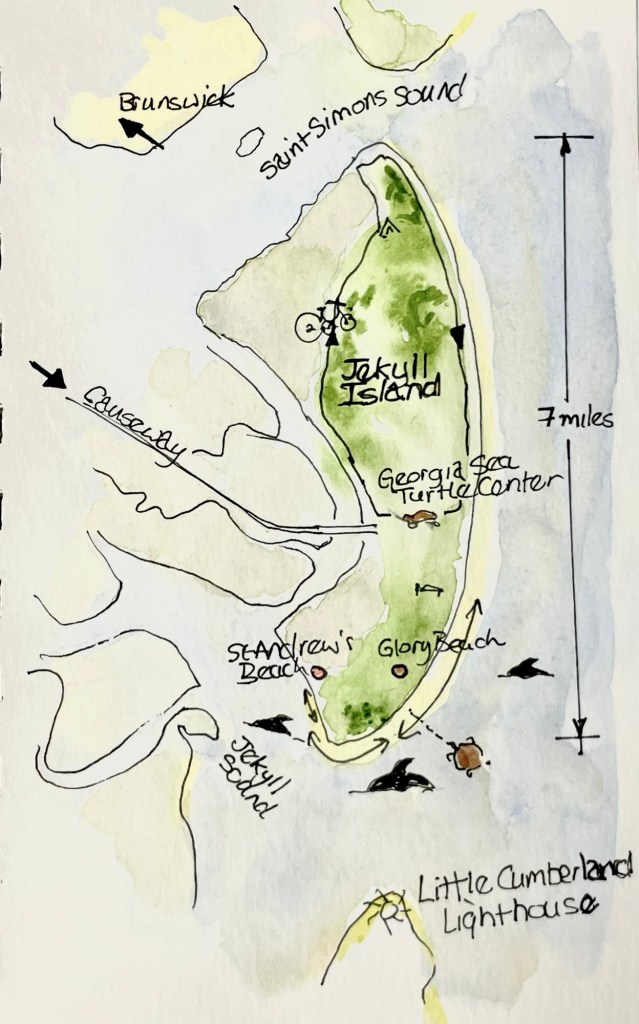
On another day we were able to walk St Andrew’s beach and settle down in the shade of dune trees. Dolphins were plentiful!
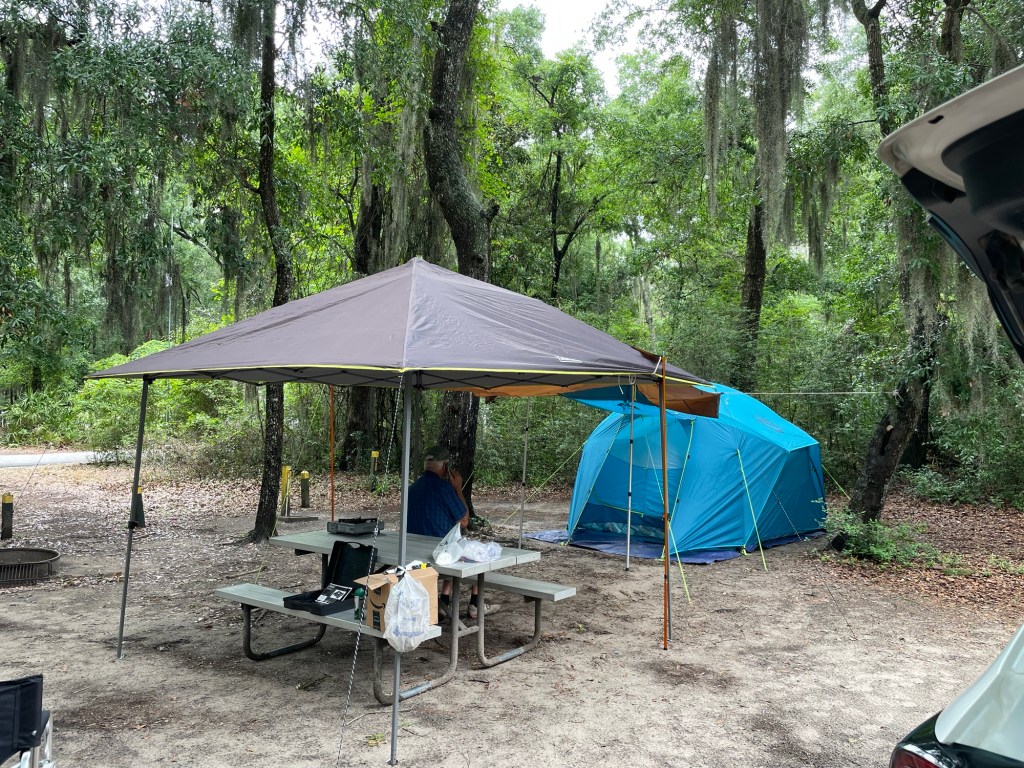
Our campsite was located at the northernmost point of the island. From there, we rented truly dreadful and excruciating bicycles to embark on a bicycle tour of the marshes, oceanfront, the residential areas of the once affluent and renowned individuals who constructed their “cottages” there, and the Sea Turtle rescue center. It was incredibly gratifying to chat with a recent graduate of an ocean studies program. It was truly inspiring to hear her unwavering passion for turtles and their preservation. There are young individuals out there who genuinely possess a profound commitment to the future.
In the evening and early morning, we strolled along the northern beaches to witness the breathtaking spectacle of the sun setting and rising. It was a truly magical time. I foolishly believed that my attempts at throat singing had somehow captivated a dolphin, causing it to swim around this fishing dock. In reality, the tide was changing, and it likely found a more suitable fishing area.
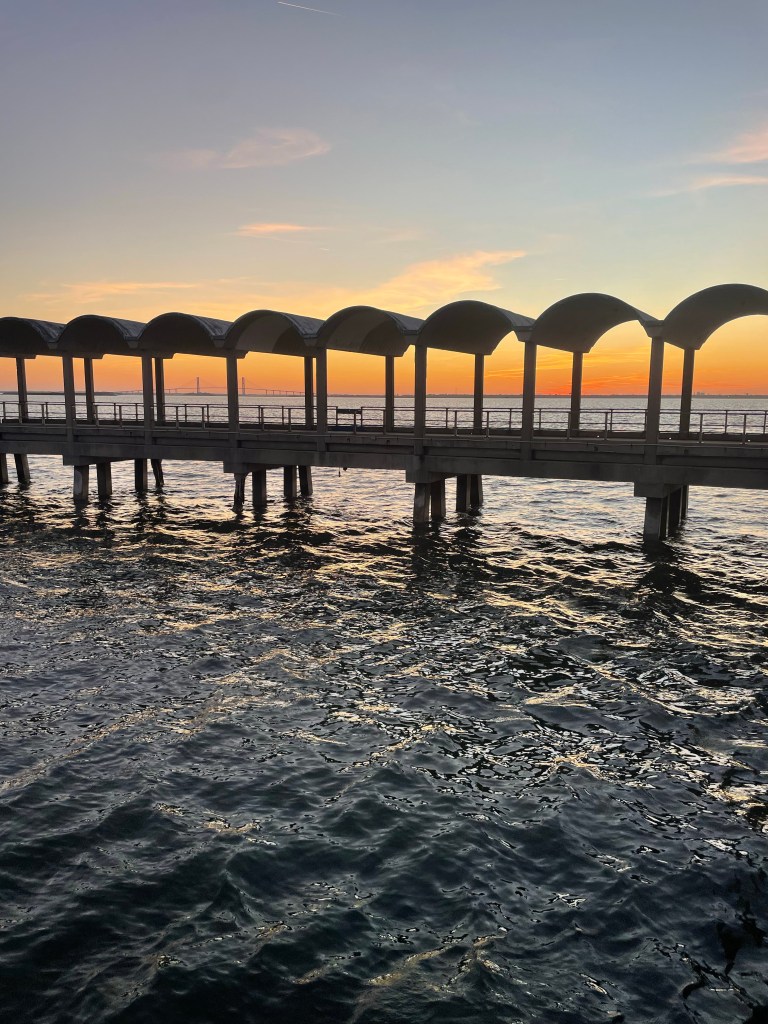
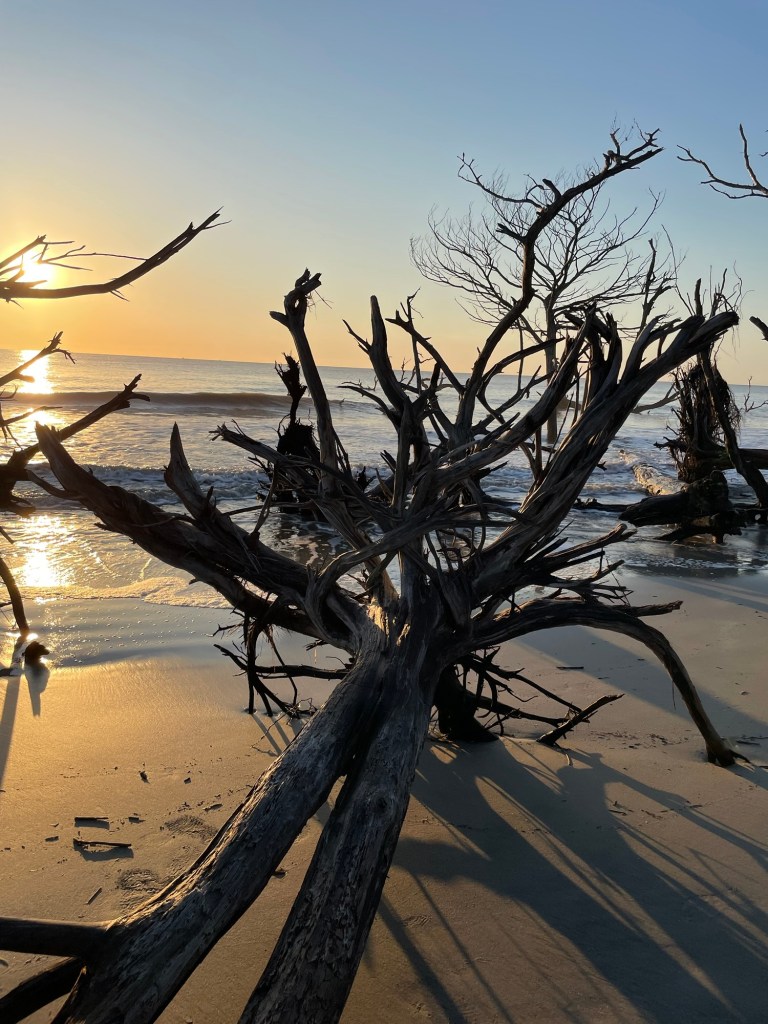
This was one of many sunrise pictures taken from the northeastern side of the island at Driftwood Beach. The light transformed gradually against the backdrop of gentle waves.
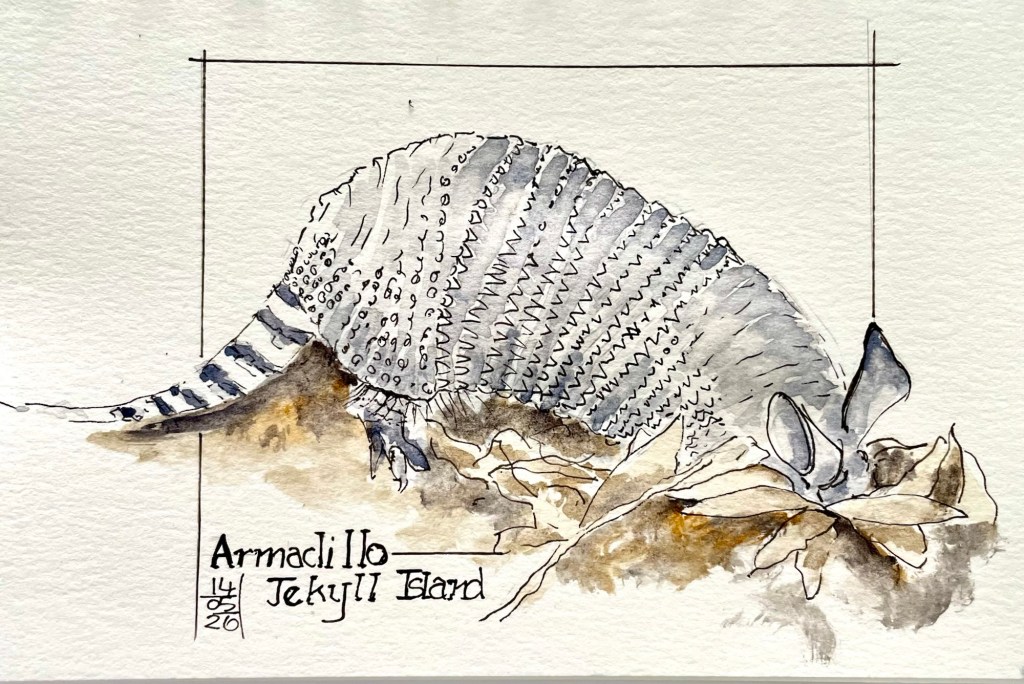
One of the most elusive creatures was the armadillo. While one sees plenty of squished ones on the road, finding a live one was a real treat. They have an intriguing hunting strategy. They run fast with their noses under the leaf debris. For the life of me I can’t figure out how they don’t smash their noses on roots or rocks!
We left Jekyll Island and headed north to Charleston. It’s a much bigger place than I expected.
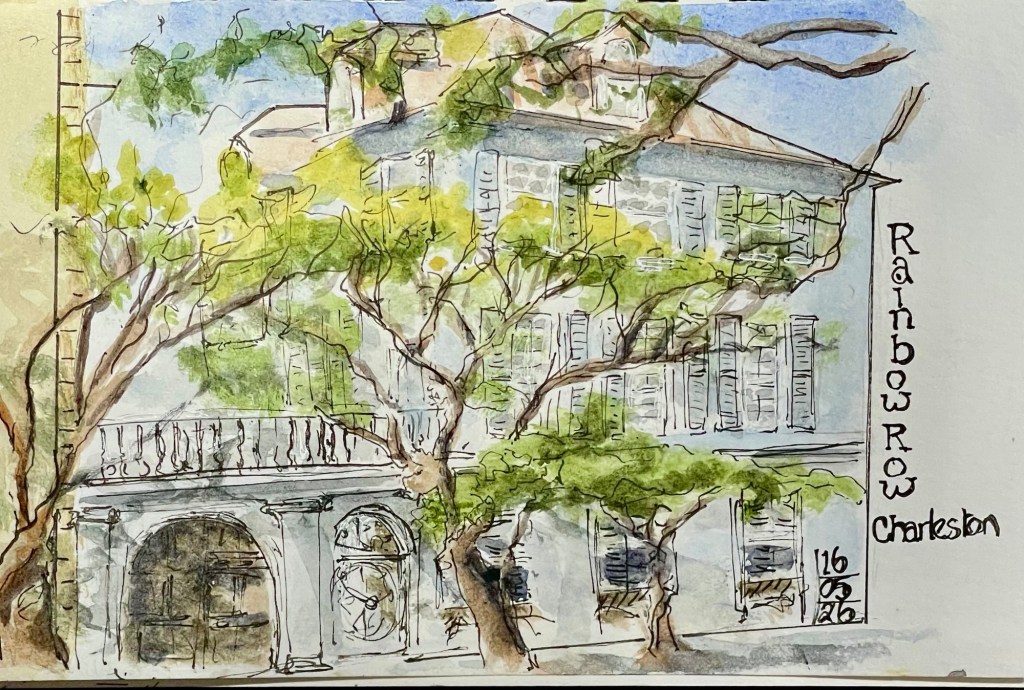
We had a delightful day exploring the historic district on foot. During a house tour, I was particularly captivated by the institutional use of “Enslaved Persons” instead of “Slaves.” This linguistic shift compels us to confront the harsh reality that real individuals were subjected to enslavement by others. This linguistic change reminded me of the significant transformation that occurred in the early 1990s with the passage of the Americans with Disabilities Act. It became inappropriate to define people solely by their disability as “the disabled.” Instead, they are individuals first and their physical or cognitive status is merely one of their characteristics. I ended up ruminating on how often we use linguistic shortcuts to classify groups of people by single words that can in turn, can dehumanize their existence.
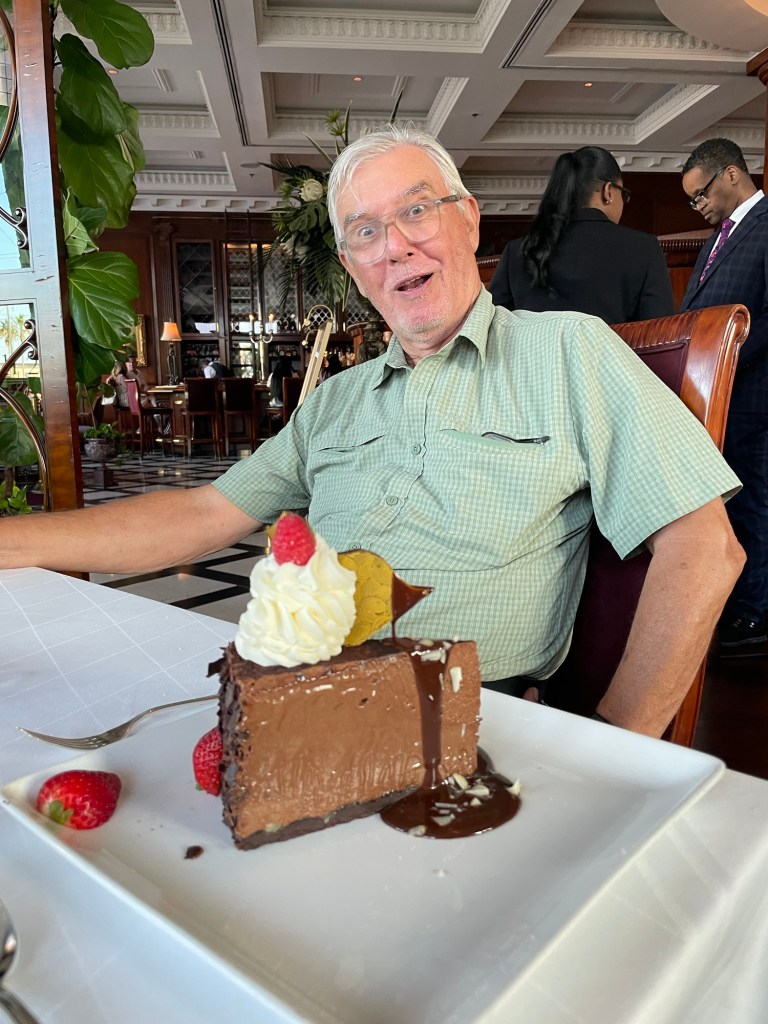
One of the things that defines Charleston is food. We splurged and had supper at one of the classic restaurants (Grill 225). Andreas assured me that this place defines Shrimp and Grits. . I must admit, I was pleasantly surprised by the dish. However, the true highlight of our meal was the decadent chocolate cake. We shared a slice, and I can honestly say that I can’t fathom how anyone could possibly finish an entire slice.
From Charleston we headed to Huntington Beach, South Carolina where we were camping for three nights and a beach resort for two nights.
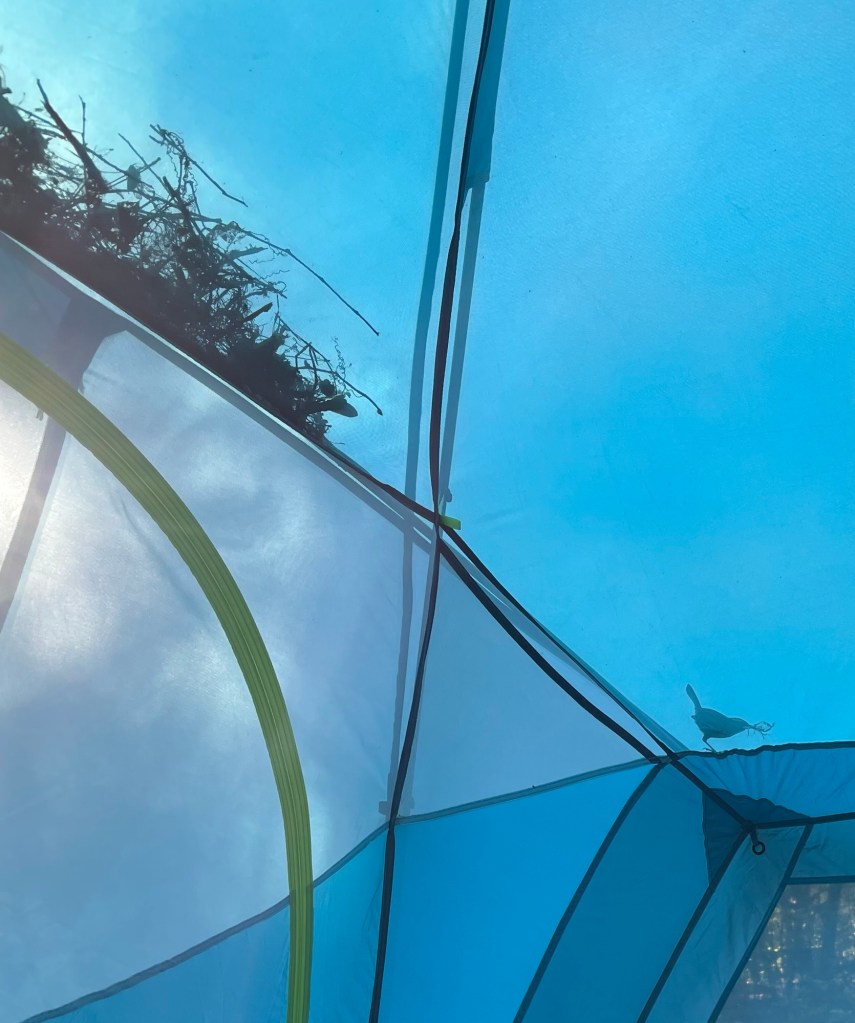
Oh the surf was wonderful and the wildlife spectacular. We had a determined pair of Carolina wrens attempting to build a nest in our tent. I cleared out the twigs and leaves every morning and by the time we returned in the evening the nest was well on the way to being rebuilt.
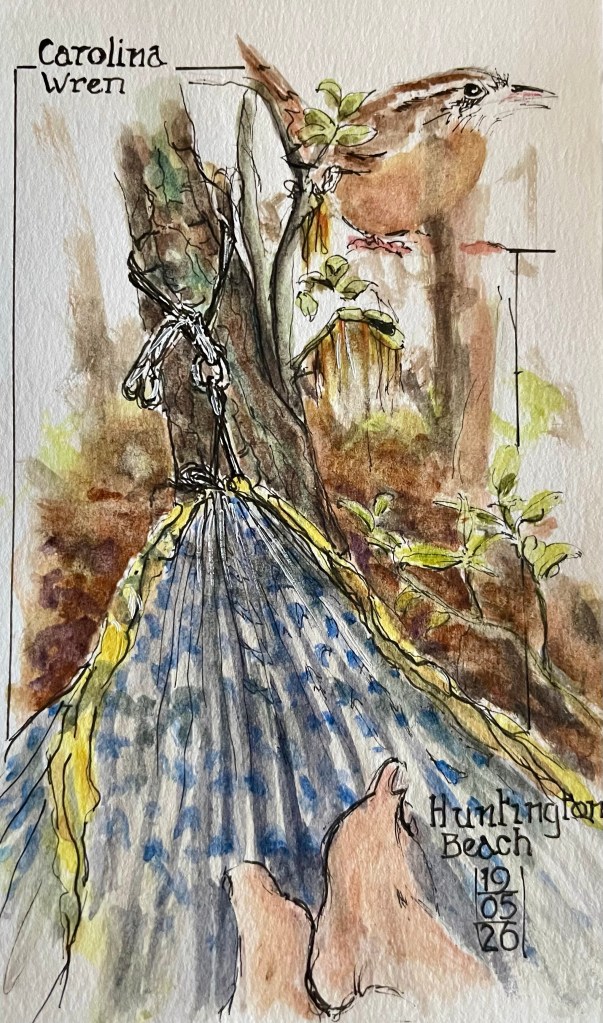
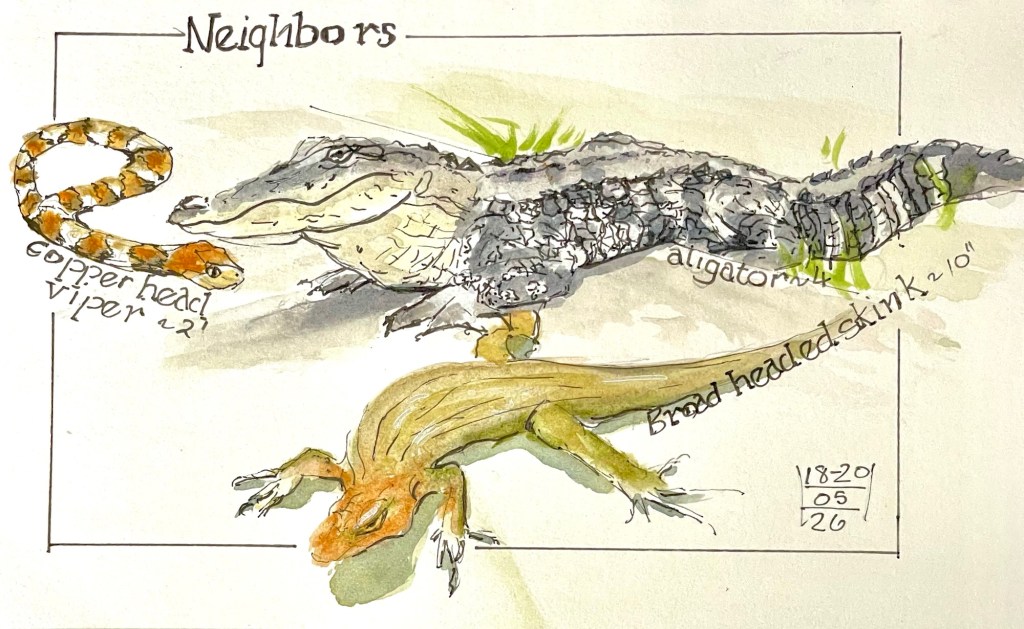
The most common neighbors other than wrens were skinks, cardinals, one copper head snake and alligators. The alligators range in size from a couple of feet to well over 10 feet. They appear to have a routine crossing from one brackish pond to a less salty pond depending on the status of the tides. We were able to observe this daily migration from a very close position. They were not to be rushed and if the sidewalk felt warm they just plopped down and warmed their bellies. One morning we heard them rumbling. It’s an eerie sound somewhere between a huge bull frog and a freight train.


