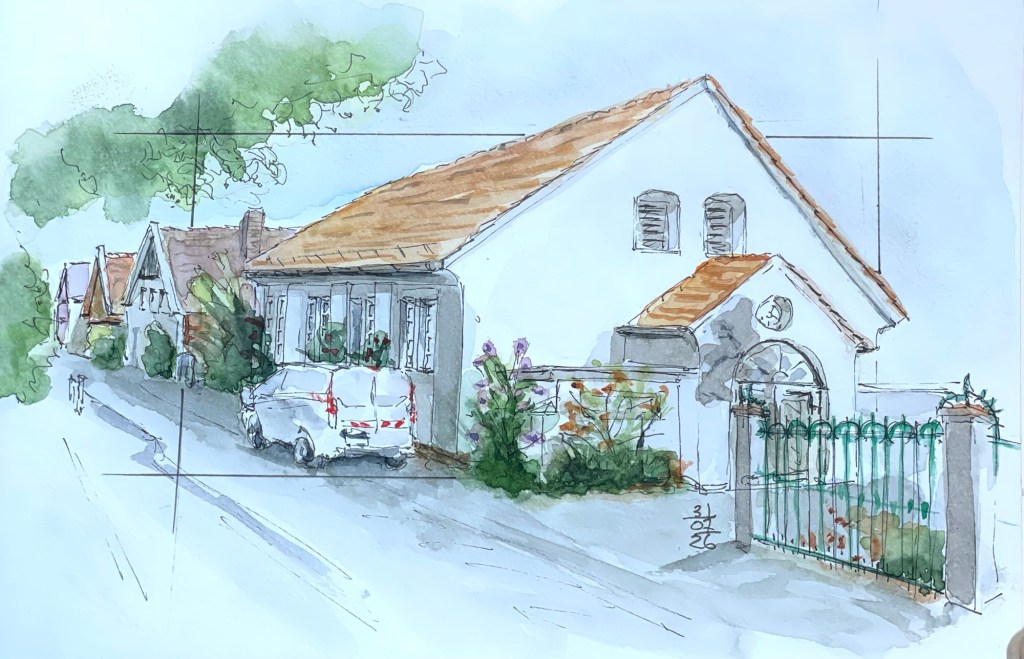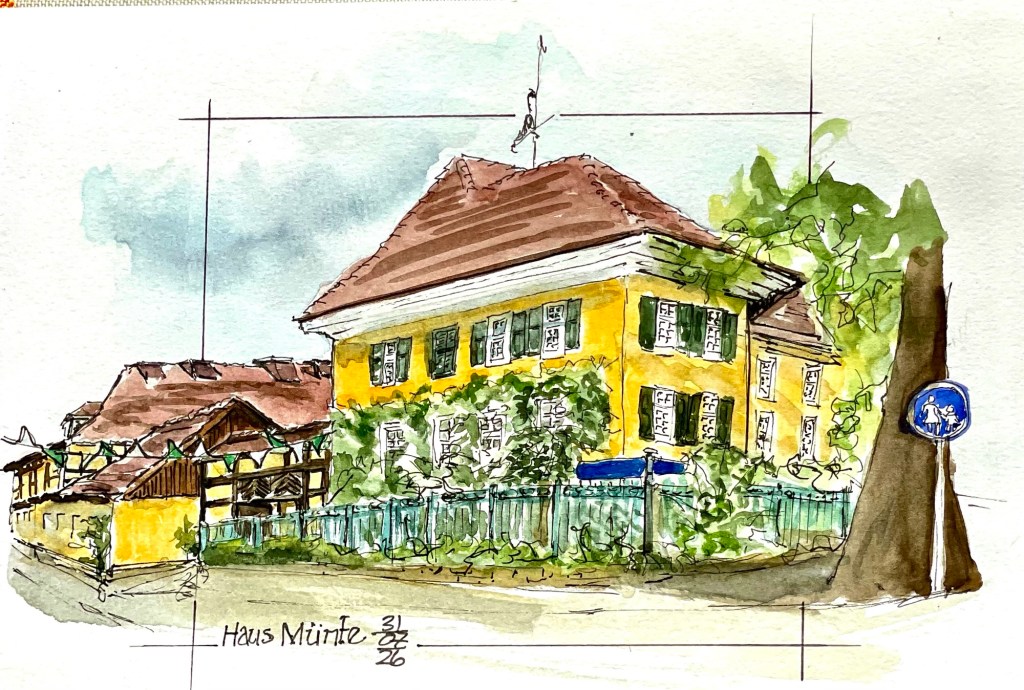
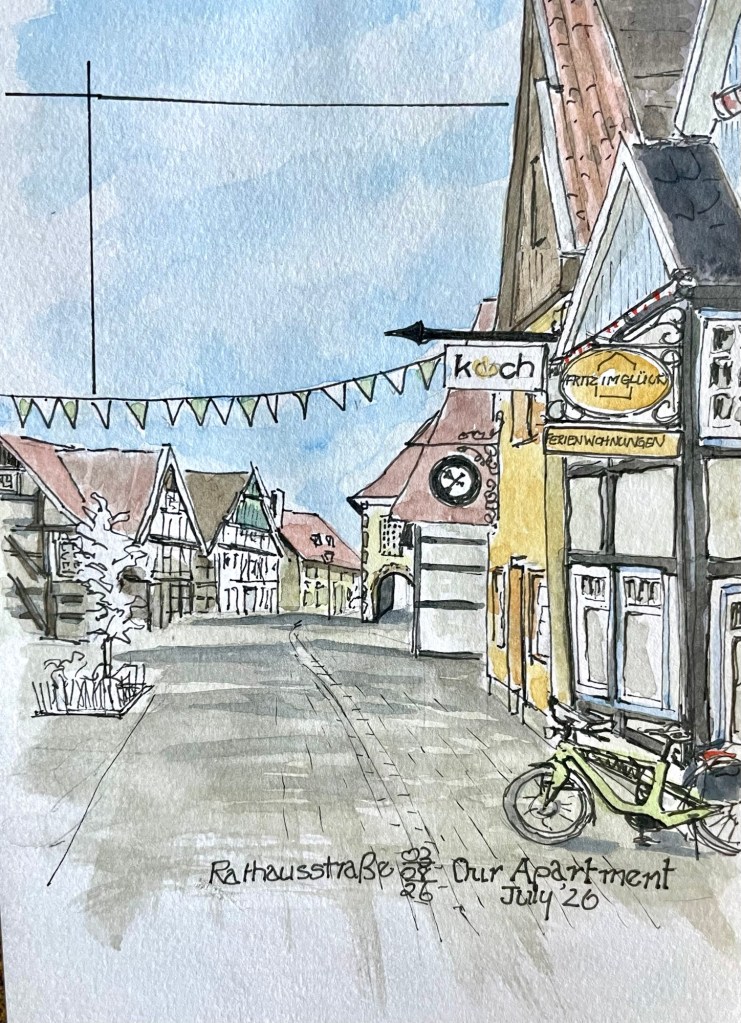
Wir verabschieden uns von unserem zweiten Zuhause „Fritz im Glück“ – das Fachwerkhaus auf der rechten Seite
Our apartment in Rietberg is the half timbered house on the right where we had the ground floor apartment complete with a small patio garden in the back. The renovation of the street in front was finishing up as we arrived and by the time we left the major work was being completed at the other end of the block. Small linden trees have been planted at regular intervals and I can only imagine how more beautiful this largely pedestrian/bicycle route will become. It’s a real joy to be able to walk to the Friday morning market, one of several restaurants and cafes, the grocery store, library and parks. We enjoyed our stay so much here that we have already reserved our spot for next year.
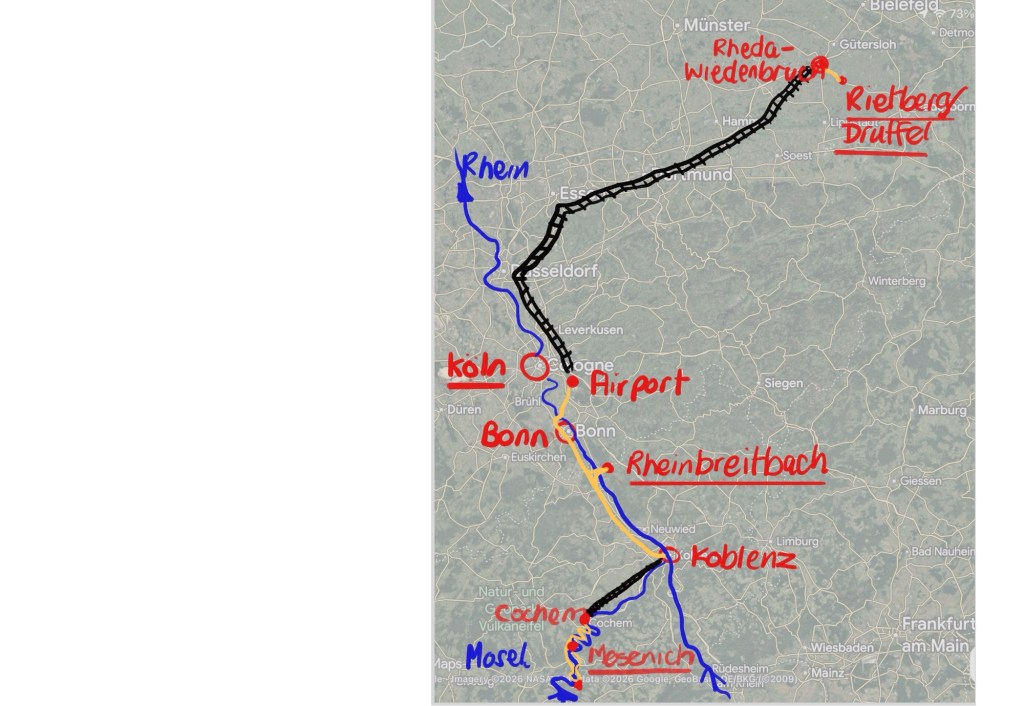
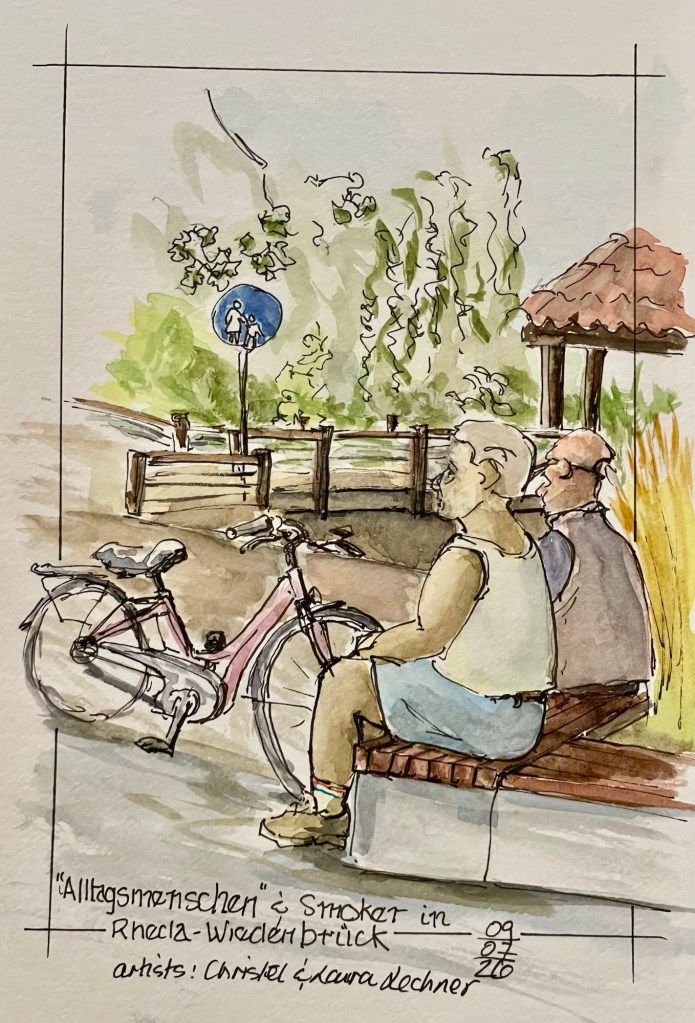
The next step on our adventure was Rheinbreitbach (on the Rhein) to visit good friends Ester and Horst. From Rietberg to Rheinbreitbach is now a familiar route combining bicycling and train rides. We „saddled the horses“ early and cycled about 40 minutes to the train station at Rheda-Wiedenbrück. There we were able to get on a train with the bicycles with the plan to get off about three hours later at Cologne train station and then bicycle the day along the Rhein. About half an hour away from our arrival at Cologne the engineer announced that due to the fact that the train was running significantly late, we were not going to stop at Cologne after all, but continue on to the airport. Fortunately we had tried this route in reverse a couple of years earlier when we were returning to Rietberg. We had taken a ferry across the Rhein and then cycled along dykes and wooded farm roads almost all the way to the airport. We were not particularly concerned about the train rerouting particularly as Andreas was able to call the ferry operator to make sure that there was enough water in the Rhein for the ferry to operate. What we had forgotten was that its not that usual to ride a bicycle to an airport and consequently the bicycle routes are not necessarily well marked and Google is more than a bit „not-bicycle-aware“. Before leaving the arrivals terminal (the train station was under the airport) I stopped to ask a policeman where we could find the bicycle routes. Well the combination of my baby-deutsch and the unbelievable request left him bewildered for a few moments. He was however able to gather his whits and put us on the right path out of the airport. Unfortunately we put too much faith in Google and not enough confidence in the Policeman and ended up on a not so pleasant route across country, in full sunshine and nowhere to stop for a coffee and lunch but we did end up at the right ferry. After that, it was an enjoyable ride along the southern side of the Rhein. The low water levels were striking and this year we saw no active Viking cruise ships and very few bulk carriers.
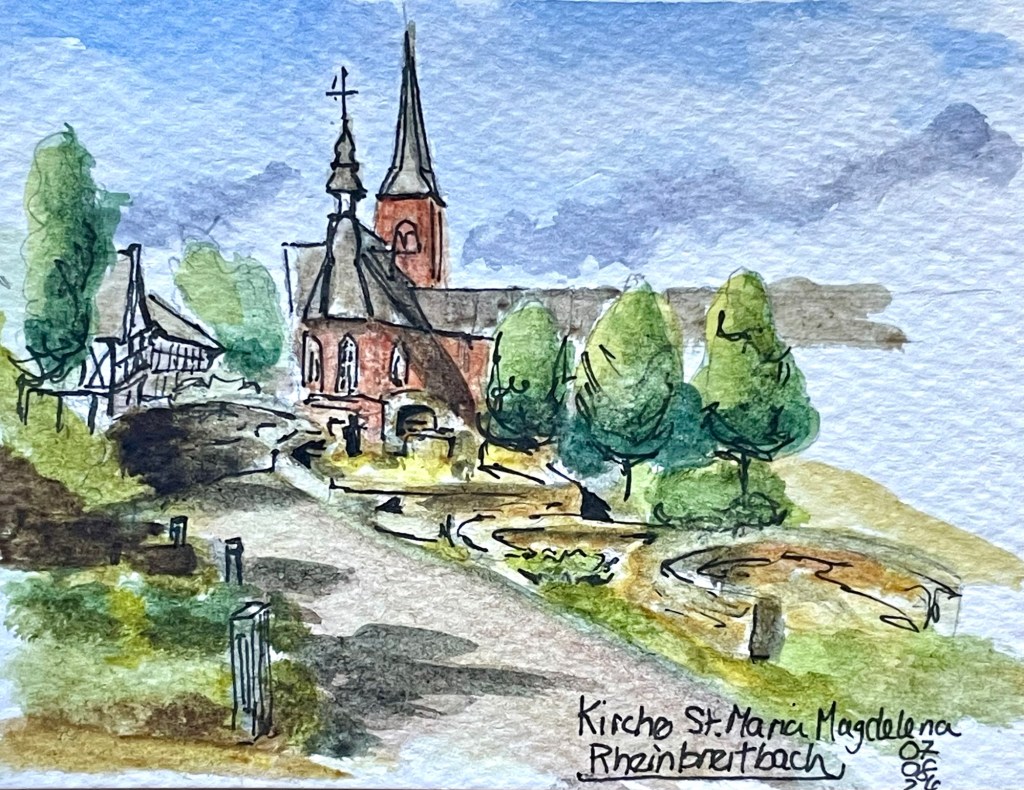
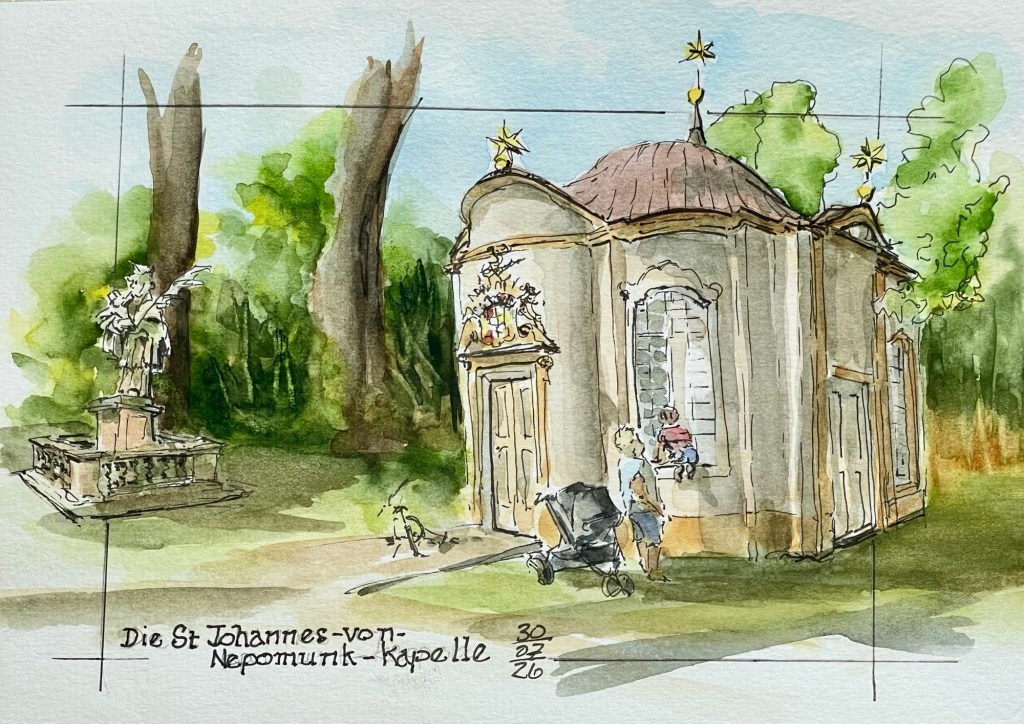
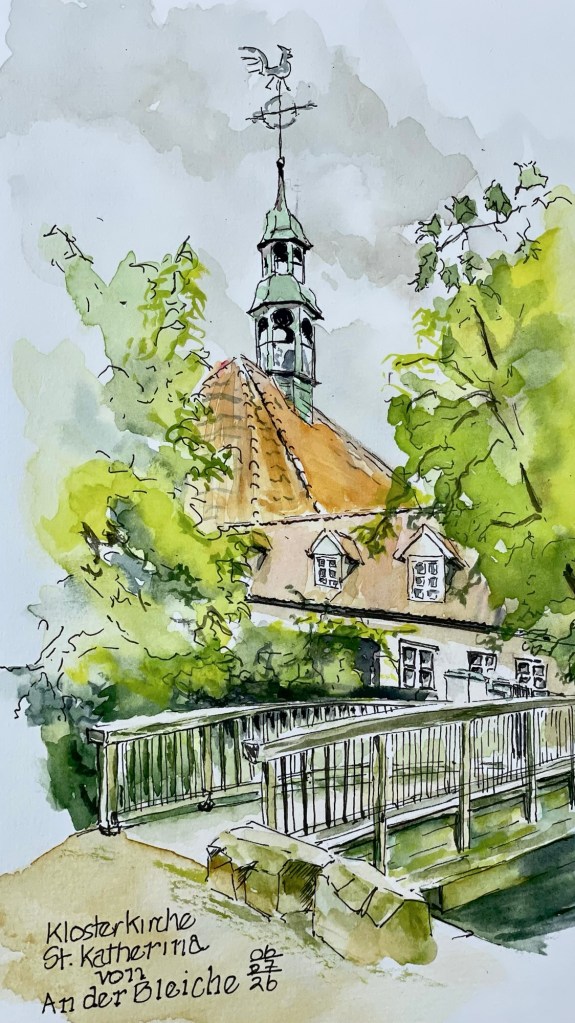
Rheinbreitbach is a small village nestled on the fairly steep slope of the Rhein. The village itself is charming and offers plenty of opportunity for sketching. Id made the decision to swap back to my very small sketchbooks to ensure that I always had my sketching stuff with me. I must admit I had become spoiled in Rietberg using larger paper and a wider color palette. Despite the short comings of a 5“ x 3“ sketch pad i was able to capture some of the charm of the church grounds.
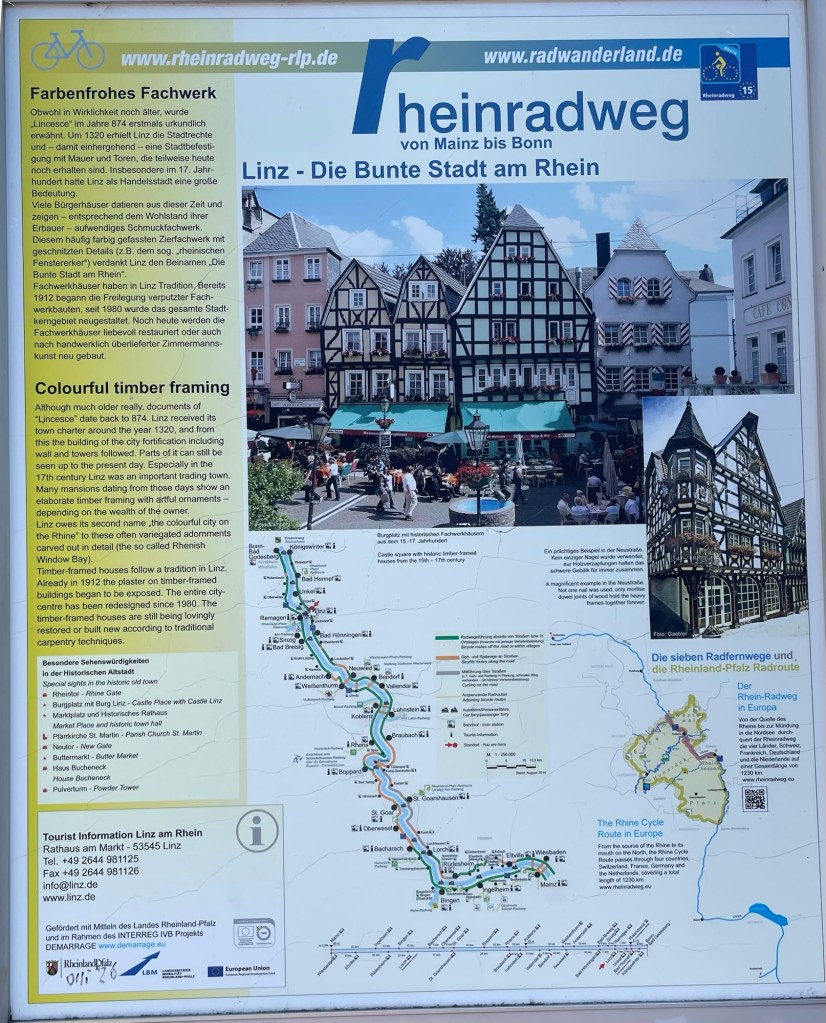
We spent the next day exploring the flea market in Linz, another charming town. The timber framing here is more elaborate than the northern areas around Rietberg perhaps indicating more wealth at the time of their construction.
After our too short visit with Ester and Horst, we were back on the bikes to Koblenz to pick up a train to Cochem where we to meet Andreas‘s daughter the next day. The train ride was memorable to say the least. The previous train had been cancelled and so the platform was crowded with people. To add insult to injury Deutsche Bahn (DB) decided to reduce by half the number of cars of the next train. To say that the train was packed would be an understatement. For me traveling in over packed trains with a bicycle is a special kind of stress. We often haven’t take the travel Paniers off so that more bikes can be stacked close together. That means a stressful 5-10 minutes when we arrive at our destination, struggling to get bags and bikes off the train, and negotiating other people, bikes and baby carriages that either want to stay on but are standing near the exit doors, or new passengers trying to get on before the leaving passengers have exited. I’m starting to think I’m getting too old for the hassle. Fortunately Andreas has a few tricks up his sleeve, selecting stations where trains originate so that we have more time to get organized. Despite his skills, the challenges that DB is facing are extreme. More freight is being carried on the train lines as the Rivers are too low. Freight and passengers travel on the same lines. There‘s pressure to speed trains up and put more trains of the lines, but the trains and line segments are not always compatible with digital signaling so things get clogged up. Add to that vandalism where people are raiding train switches for copper and I’m starting to get a real feel for a term that I first leaned as an accident investigator at the Transportation Safety Board of Canada: its a real Cluster F**K.
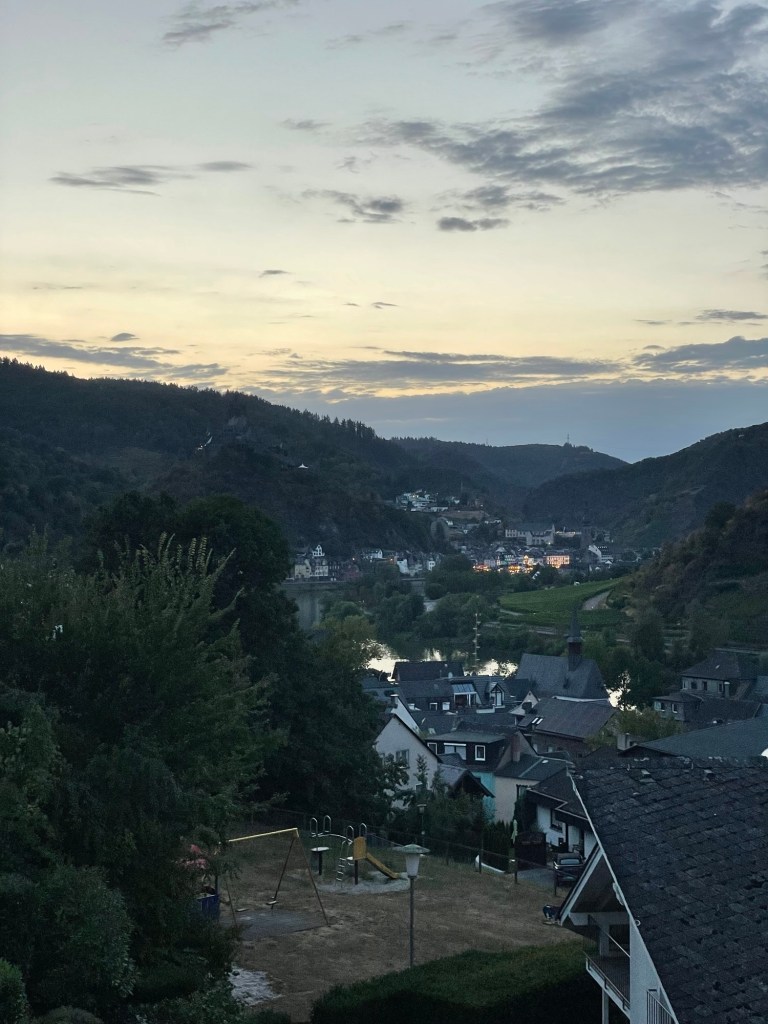
After a bit of a harrowing train trip we were relieved to arrive at a wonderful hotel in Cochem complete with Sauna and what turned out to be a fantastic kitchen and wine cellar. The hotel sources all of its food locally and has a superb touch creating healthy tasty and innovative food. I was particularly taken by their Traditional Mosel Riesling potato soup. Ill be trying t replicate it when I get back to AZ
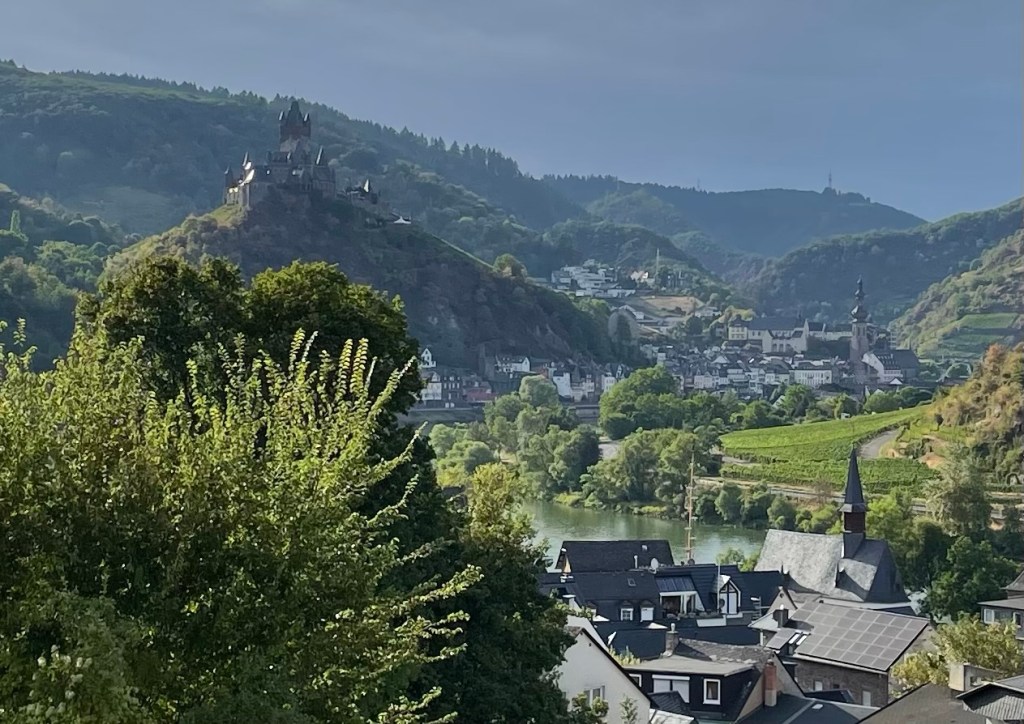
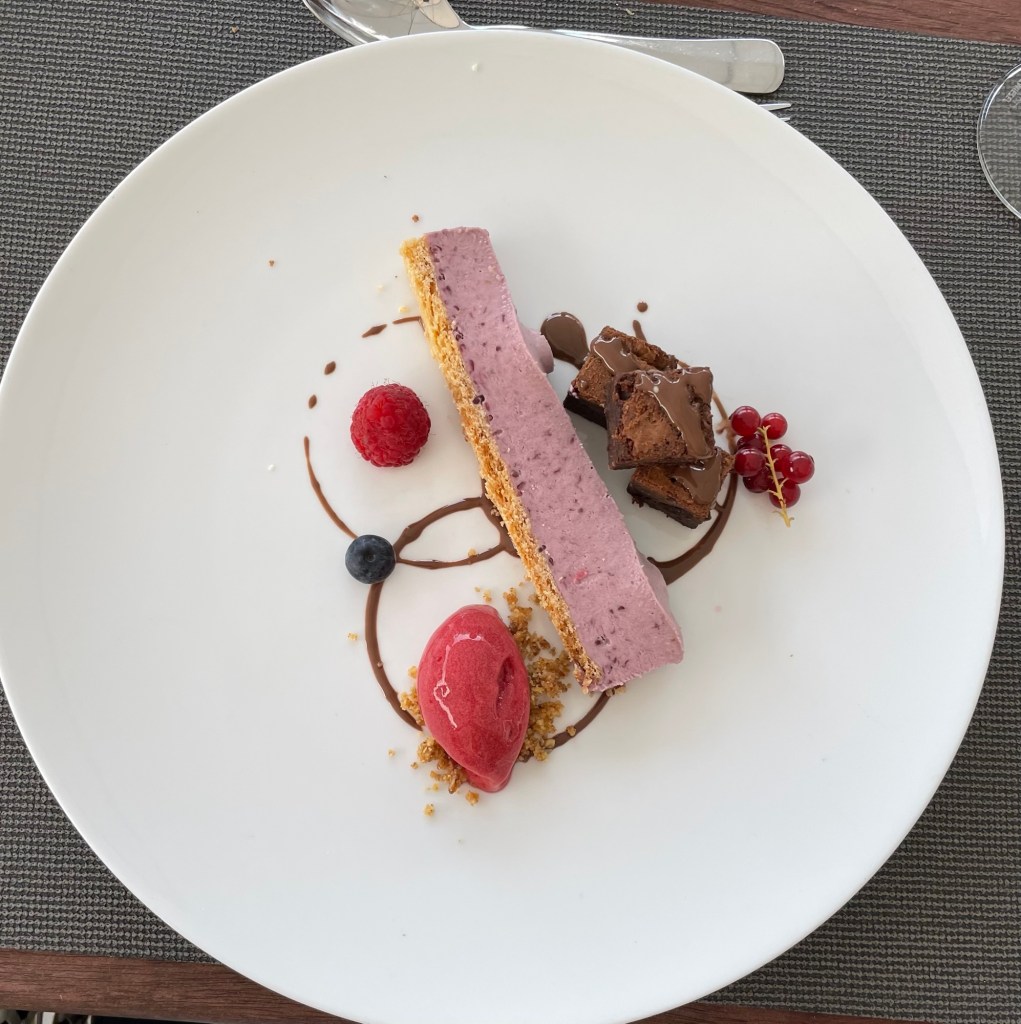
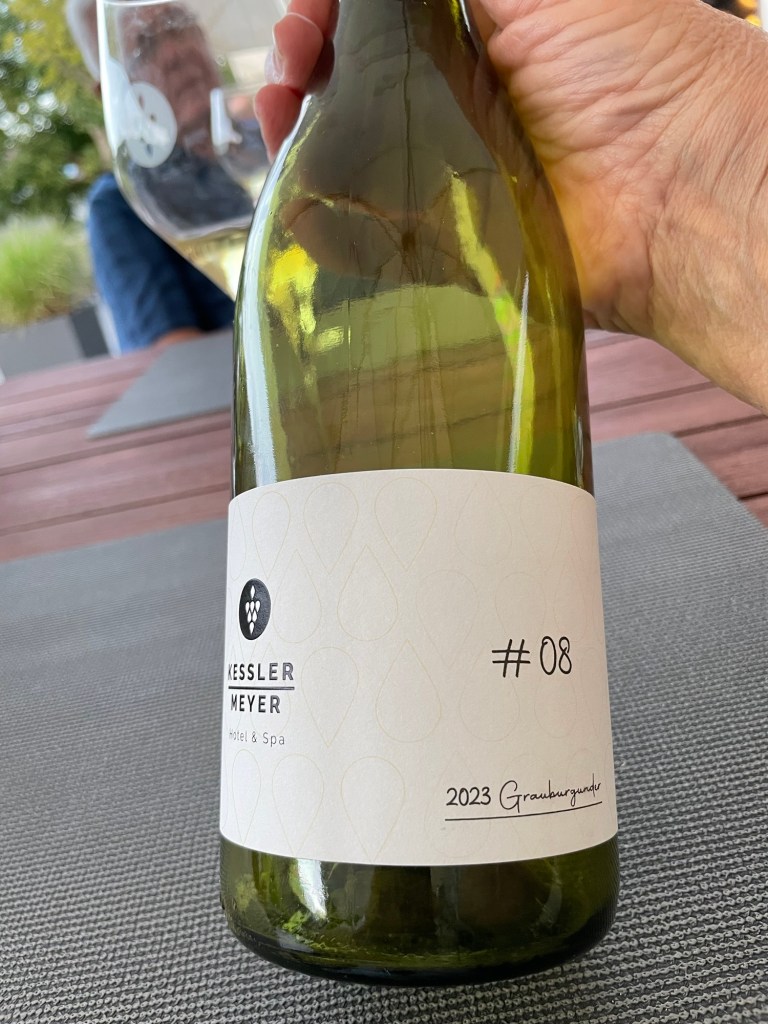
The next day we met Anneli and she was able to pick up a rental bike so that she could join us for a few days on our Mosel experience.
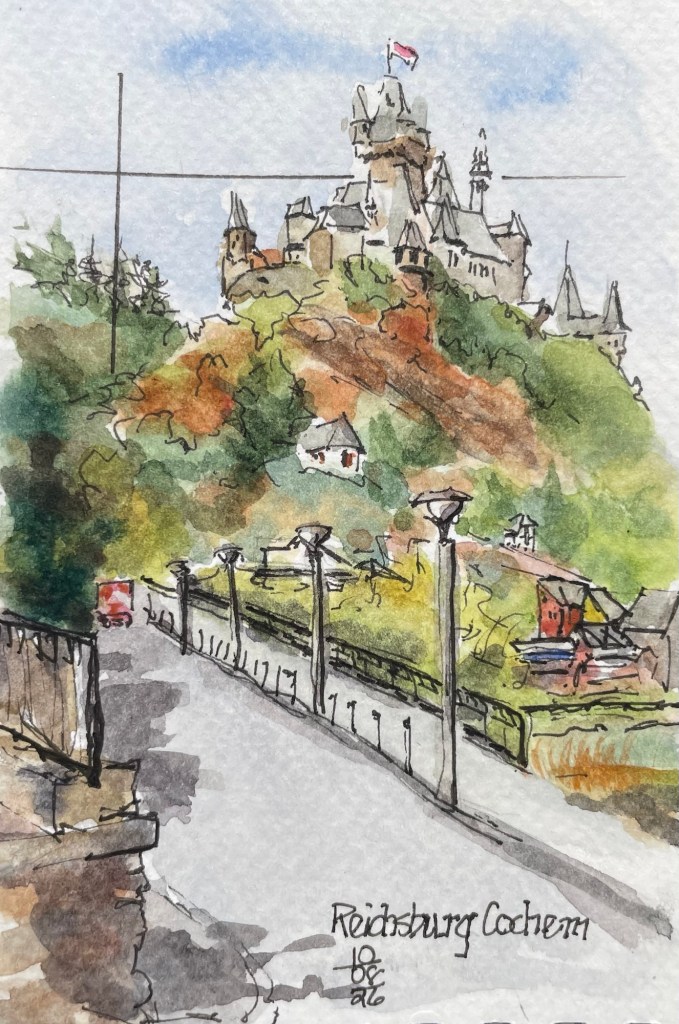
Despite only being Early August, the heat and dryness of this summer resulted in the forests looking more like early fall. Instead of the wonderful oranges and yellows of a fall woodland day, many of the trees were brown and losing leaves already. Even the vineyards high up on the hillsides looked stress and the grapes seemed small. The Mosel itself had plenty of water as it is governed by a series of lochs. While the water level was high, the water quality was very poor with algae blooms everywhere. Reports suggested that the Mosel was just a series of stagnant lakes with signs posted to keep out of the water and keep pets out too. Even though there were obvious signs of heat and drought stress, the bicycle rides along the river were still beautiful. There‘s always a cooling effect near the water and the oak and linden trees that often line the bicycle paths provide welcome shelter.
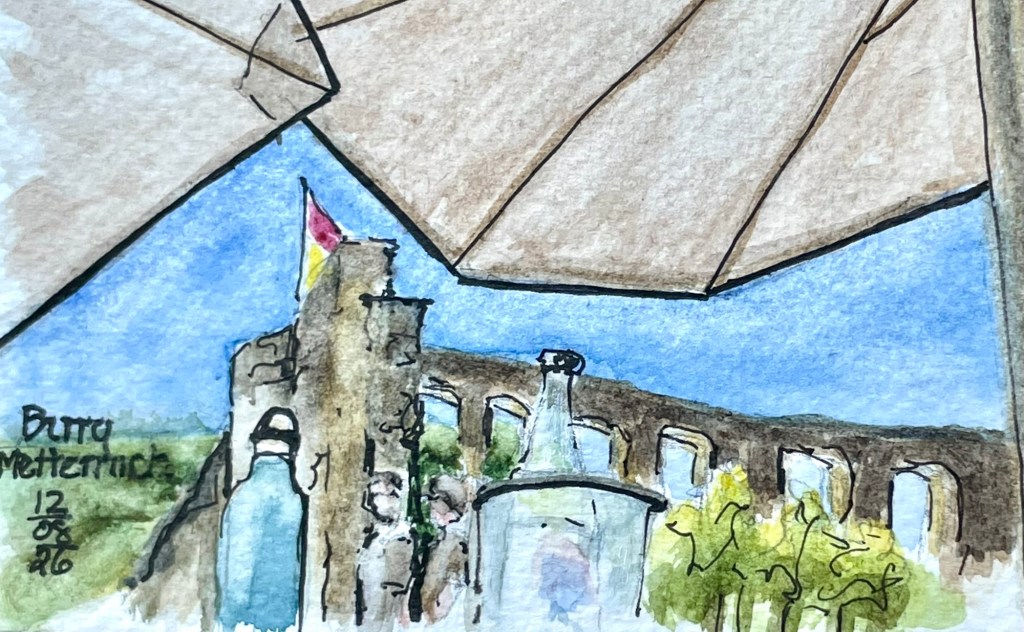
Once Anneli had her bicycle we were off to our next Pension: Weingut Pauli in Mesenich. Frau Pauli is an iconic hostess with a warm smile and eager to make her guests feel welcome. We were in the same Pension 2 years ago and thoughroughly enjoyed the local atmosphere and the „rule“ to say „guten Morgen“ to all the people in the breakfast room in the morning. This year was no exception. We were greeted like long lost friends and had adjacent rooms with small balconies overlooking the village and the forest on the other side of the Mosel.
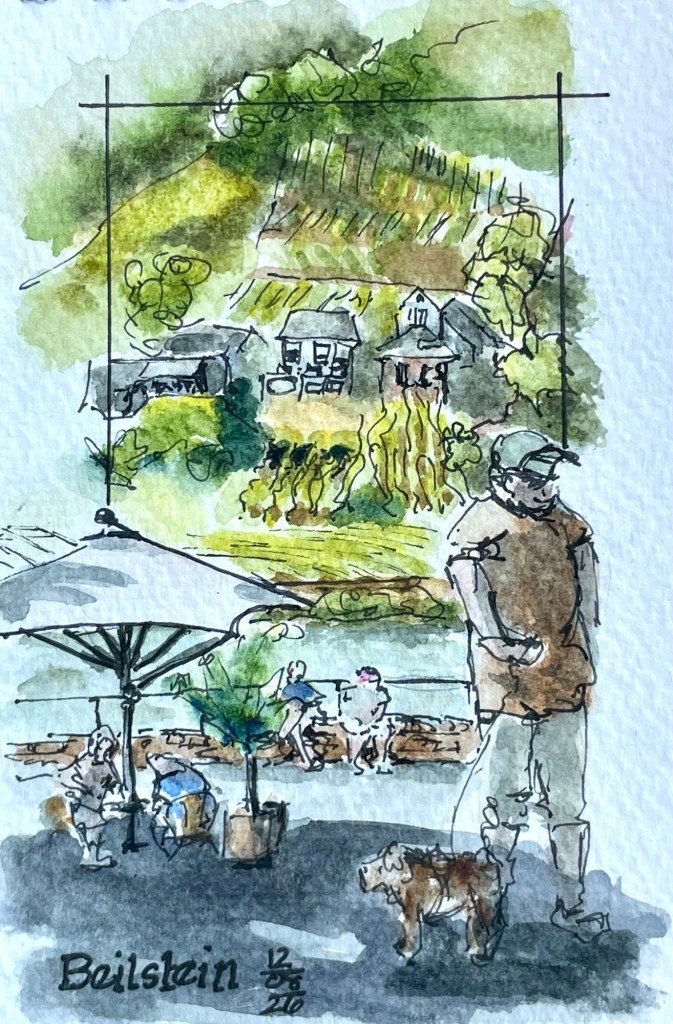
Our trips included Beilstein and Zell. Beilstein is a quintessential Mosel village with timber framed buildings along winding alleys climbing up the vineyard slopes. It’s here that we discovered Afogatos- express coffee with a scoop of vanilla icecream. Heaven!
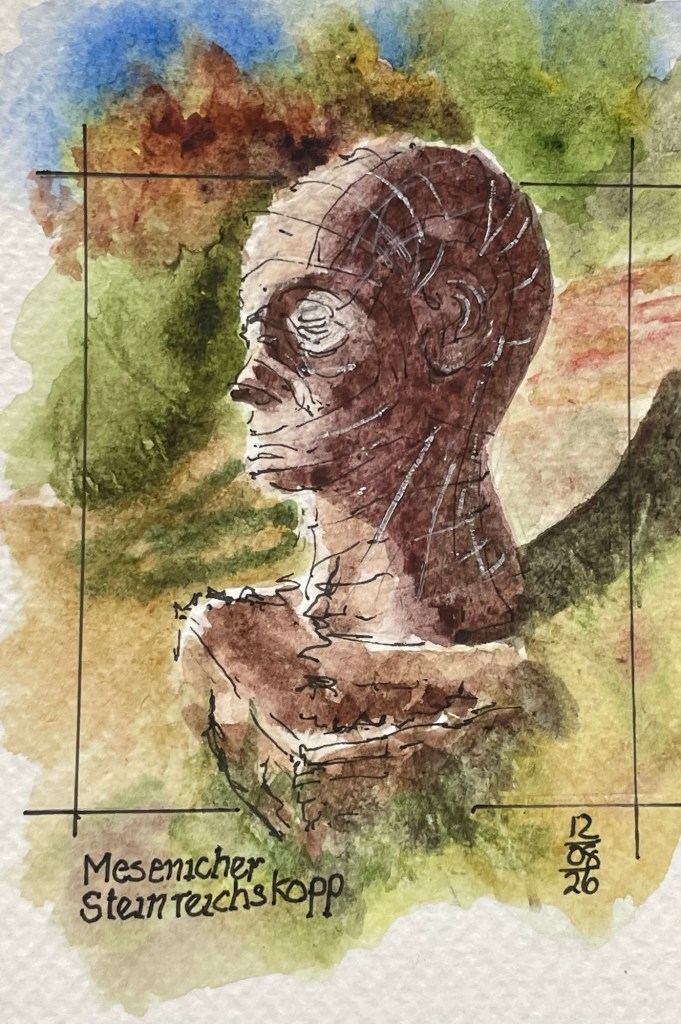
One of our last adventures was walking up to the stone head behind Mesenich, Its a larger than life wire cage in the shape of a human head filled with rocks. As the story goes, the ground in this area is mostly slate. The vines appear not to grow in earth at all! However, rocks are very necessary to create the terracing that allows the grape vines to fill the very steep hillsides. Mesenich was a place where stones could be found. The people of Mesenich were referred to as stone heads. Rather than get annoyed that they were being ridiculed by their neighbors, they decided to celebrate their unique attributes by building this stone head. It sits proudly high on the hiking path that weaves through the Mosel vineyards.
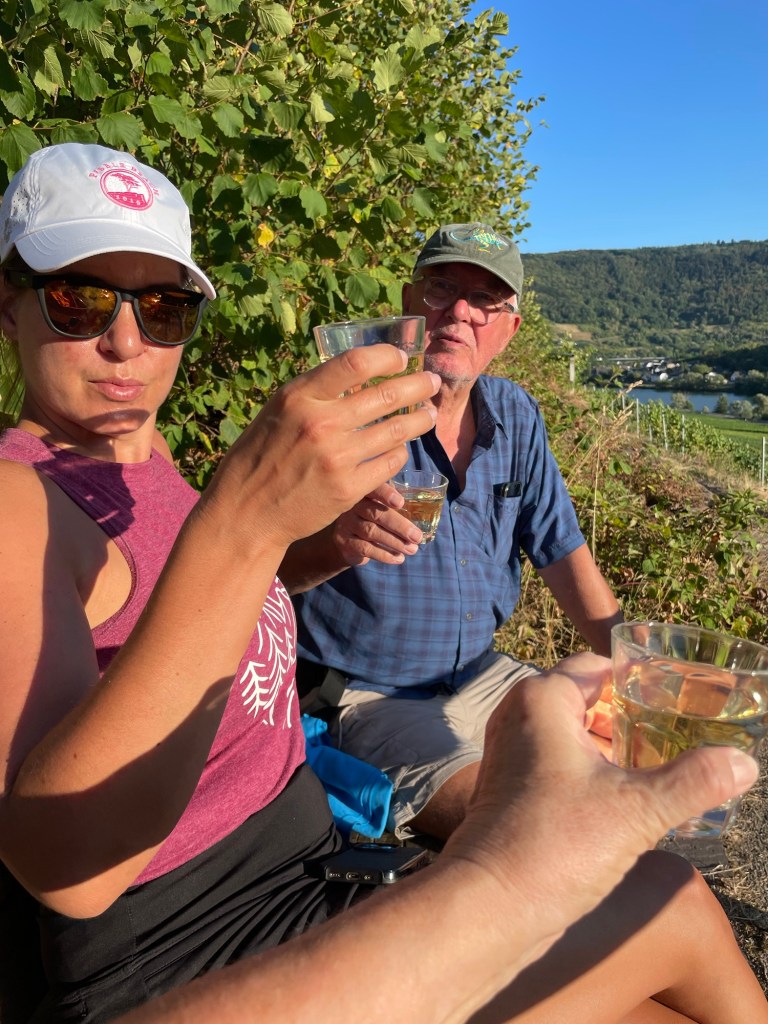
Our walk to the stone head was encouraged by an AI assisted description of the almost full eclipse of the sun that AI assured us was best seen at the very spot of the stone head. Exuberant words had us excited to experience the twilight that was sure to enthrall us. What AI failed to take into account was that the sun set behind the forests that rose up on the other side of the Mosel. No eclipse for us, just sunset. Oh well, we enjoyed a wonderful bottle of wine and a smorgasbord on the second floor patio when we returned to our Pension.
Too soon our trip drew to a close. We returned for a couple of days in Köln and then returned to Rietberg to pack before our return train trip to Frankfurt.
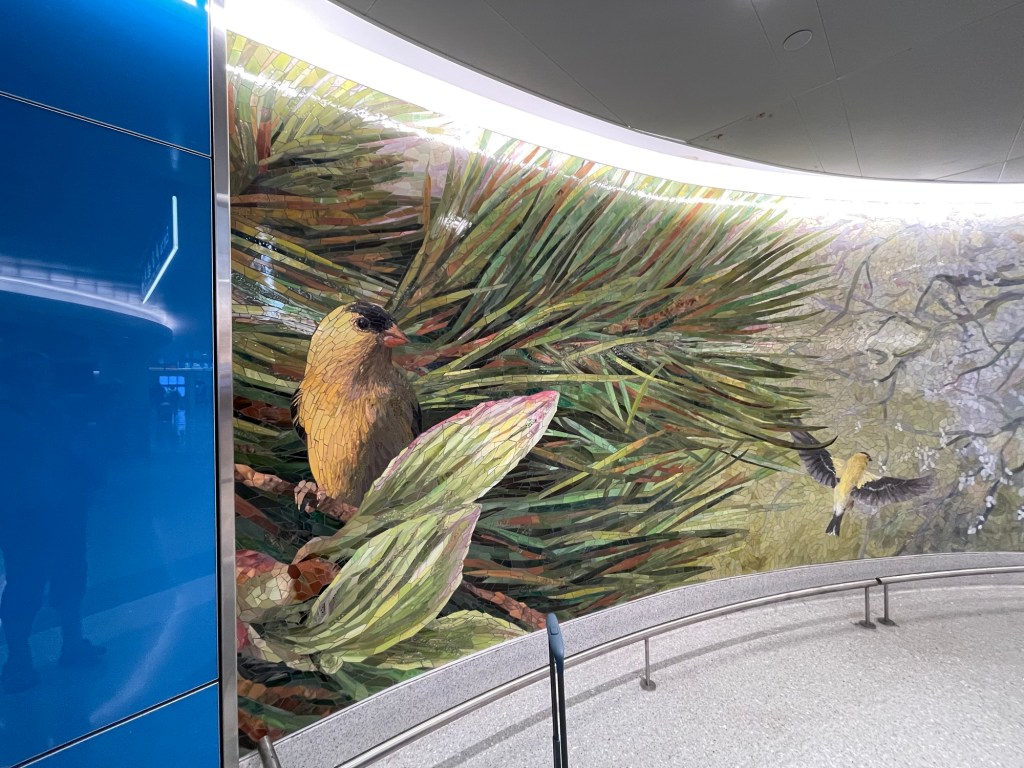
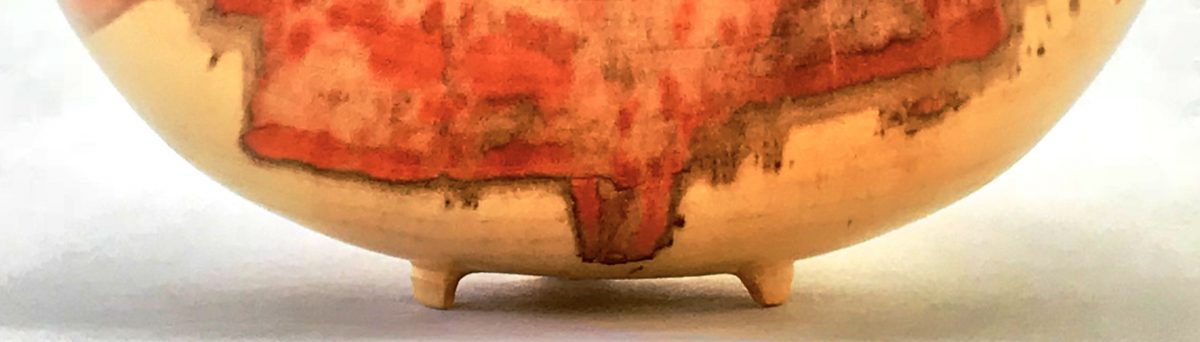
We had an uneventful flight to Charlotte NC, had the fastest pass through US immigration that I have ever experienced and then saw this amazing glass mosaic in the arrivals area.