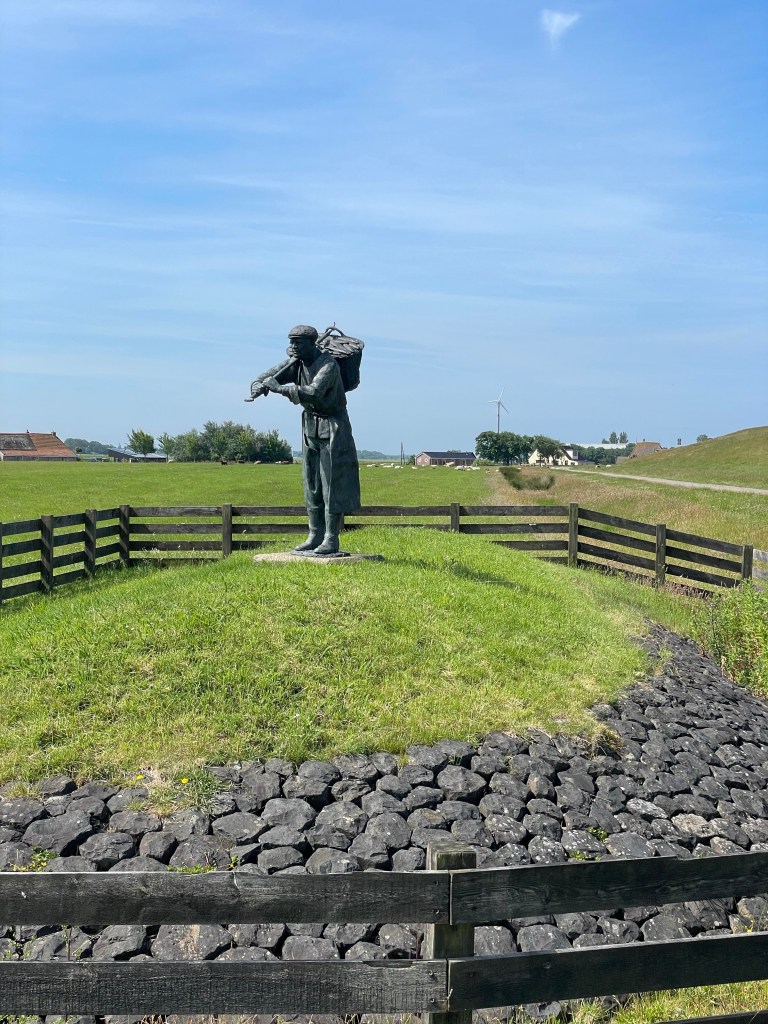
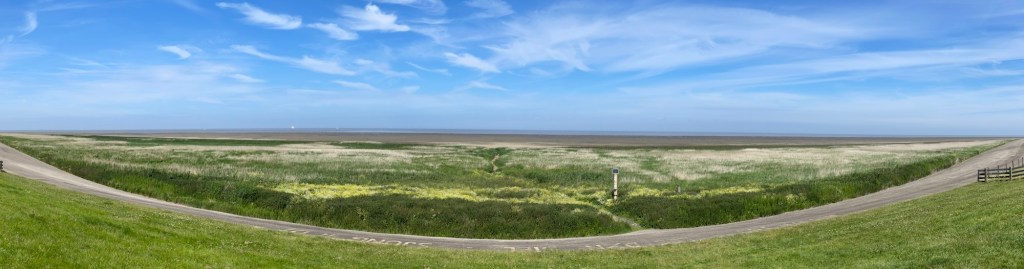
Leaving Harlingen was pretty easy. We found the dyke bicycle path quickly and could enjoy more of the Waddenzee. Somehow Waddenzee sounds so much more romantic than mudflats! Every 6 hours tidal action reveals the shallow mudflats. Needless to say the bird life continues to be amazing. In addition to birds, sheep and public art dot the landscape.
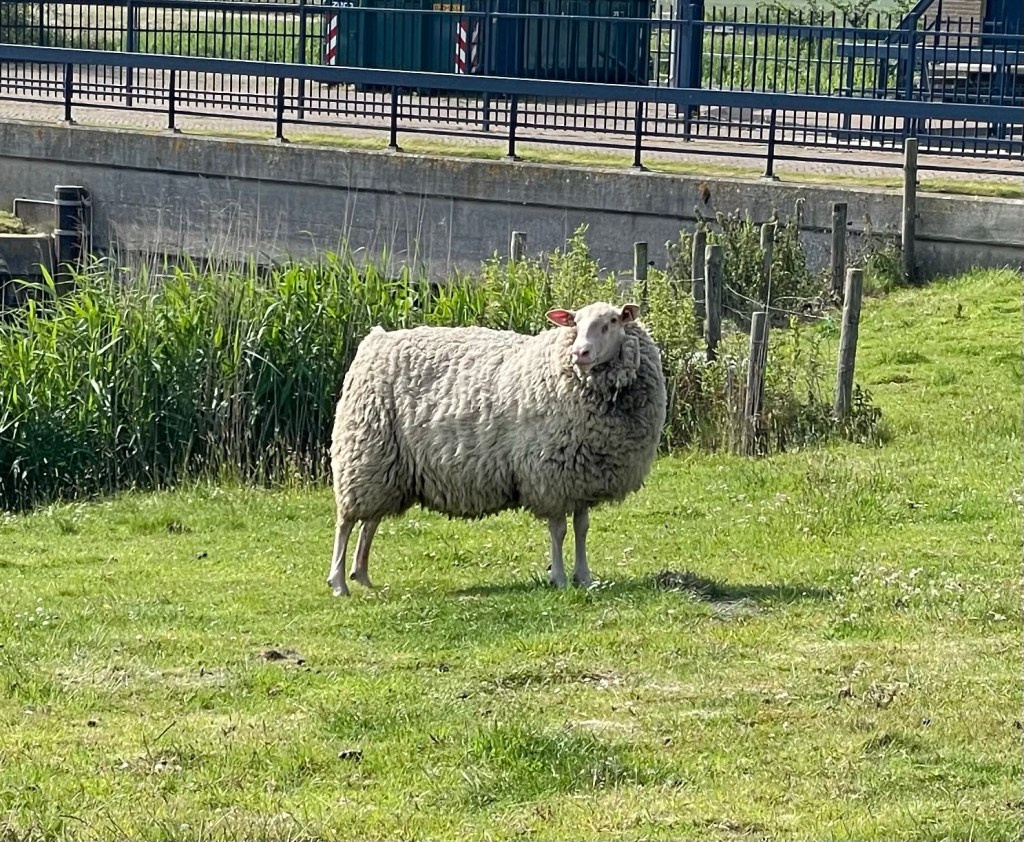


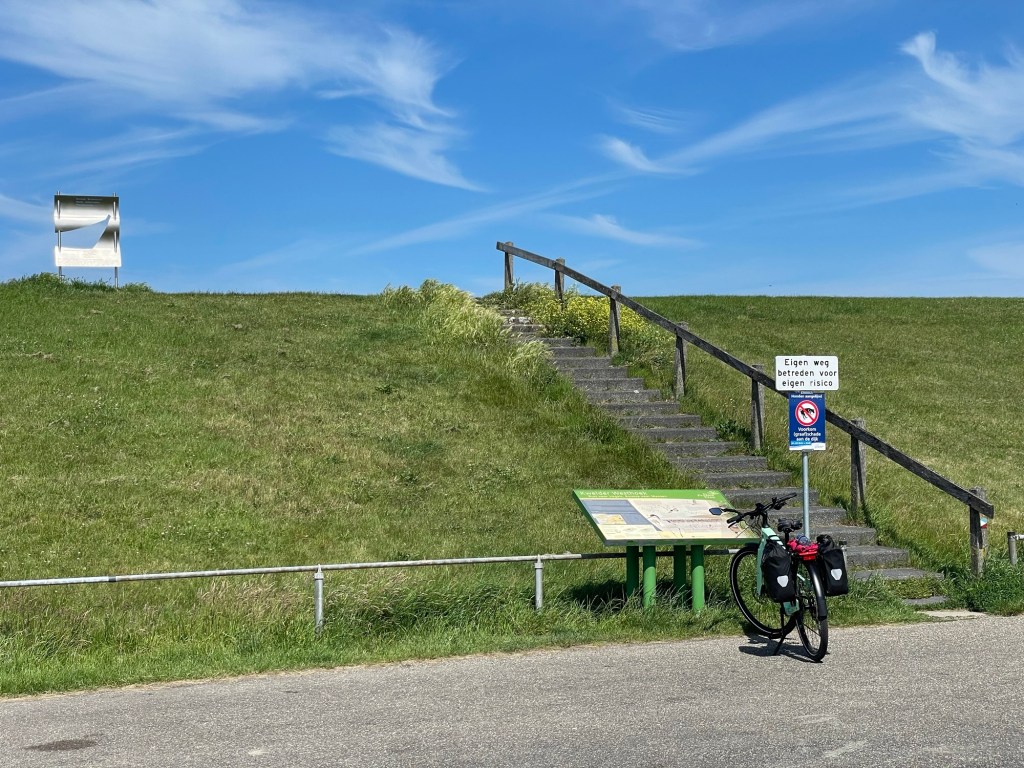
Most of the sheep had not yet been sheared and were already showing signs of heat stress despite the temperatures had not risen to what was forecast for a few days hence.
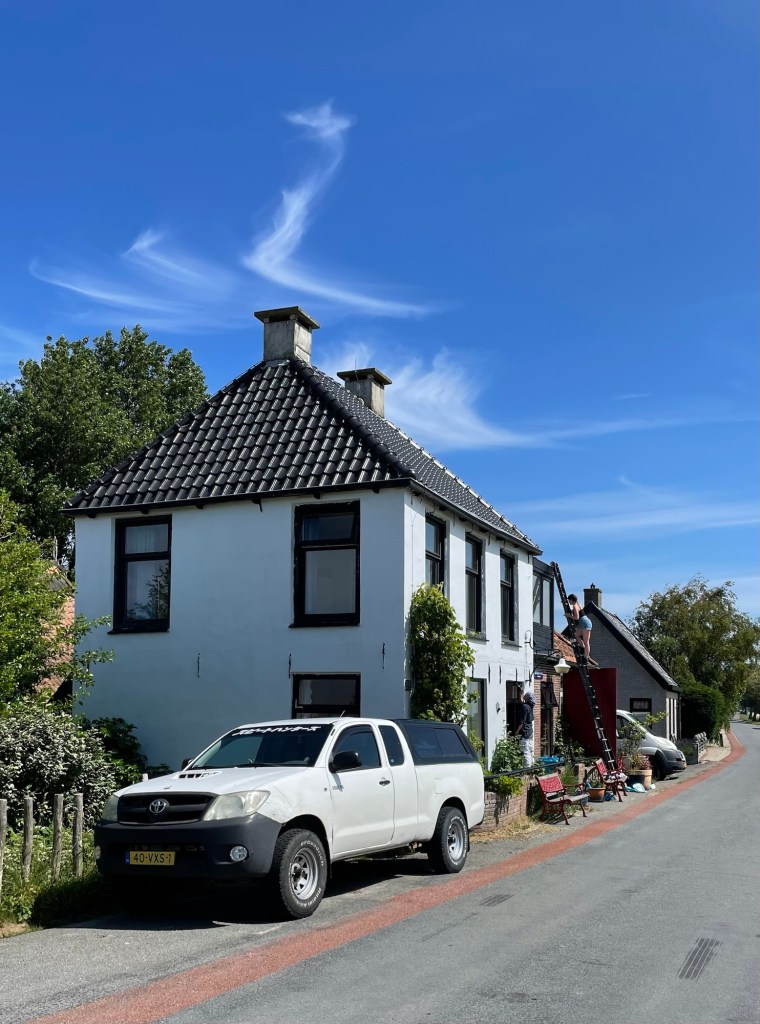
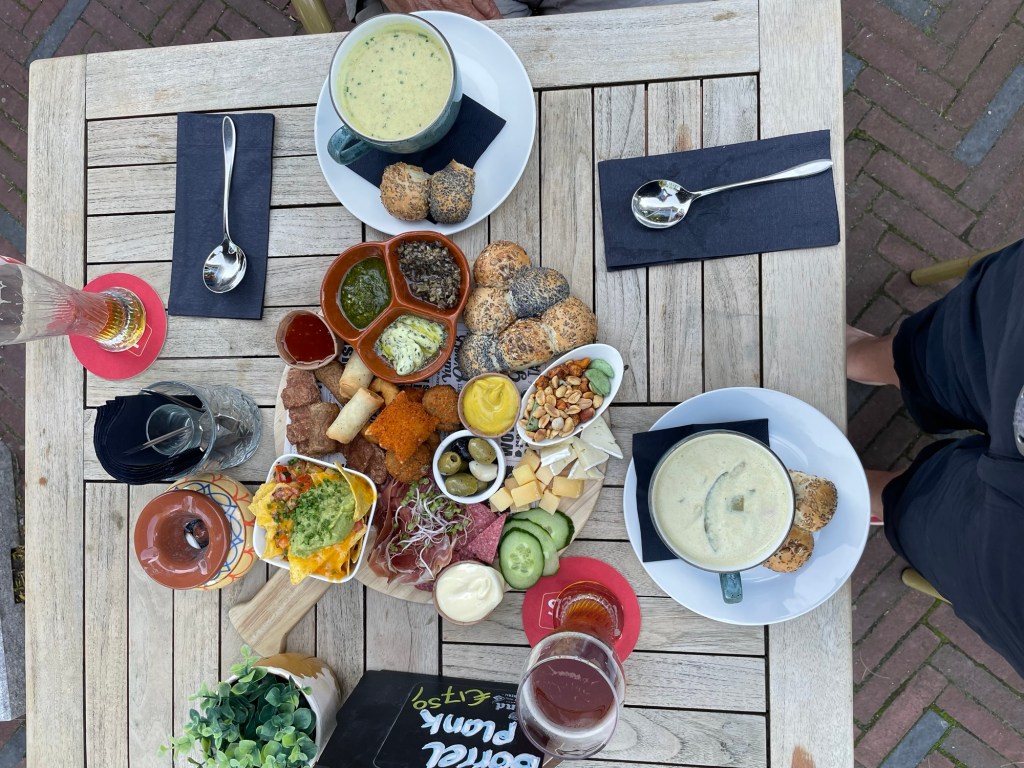
Finding interesting places to stop for a bite is another joyful adventure. On this day we found a place tucked in behind the massive dyke workings. Andreas tried what turns out to be a local dish: “Groningen mosterdsoep” – Mustard soup. It is a rich soup with a roux base. The aromatics are sweet leeks, onions and garlic. Heavy cream or crème fraîche gives it its silky feel. It is garnished with Smokey bacon. The mustard is stone ground coarse unsweetened Dutch mustard. A bit heavy for me, but I would like to try making it this coming winter time back home in AZ. I opted for their vegan vegetable (zucchini) soup with coconut milk. It was tasty but for my taste I would have added a little more coconut milk to increase the silky feel. Next door to this charming restaurant, which was clearly on the locals’ bicycle route, a mother/daughter (I’m guessing) team was painting the upstairs windows. It very much reminded me of my teenage years when, for a few years, I loved to get out the ladder and paint windows. I remember being delighted by transforming the tired, chipping paint with a bright new coat with crisp lines against the windows.
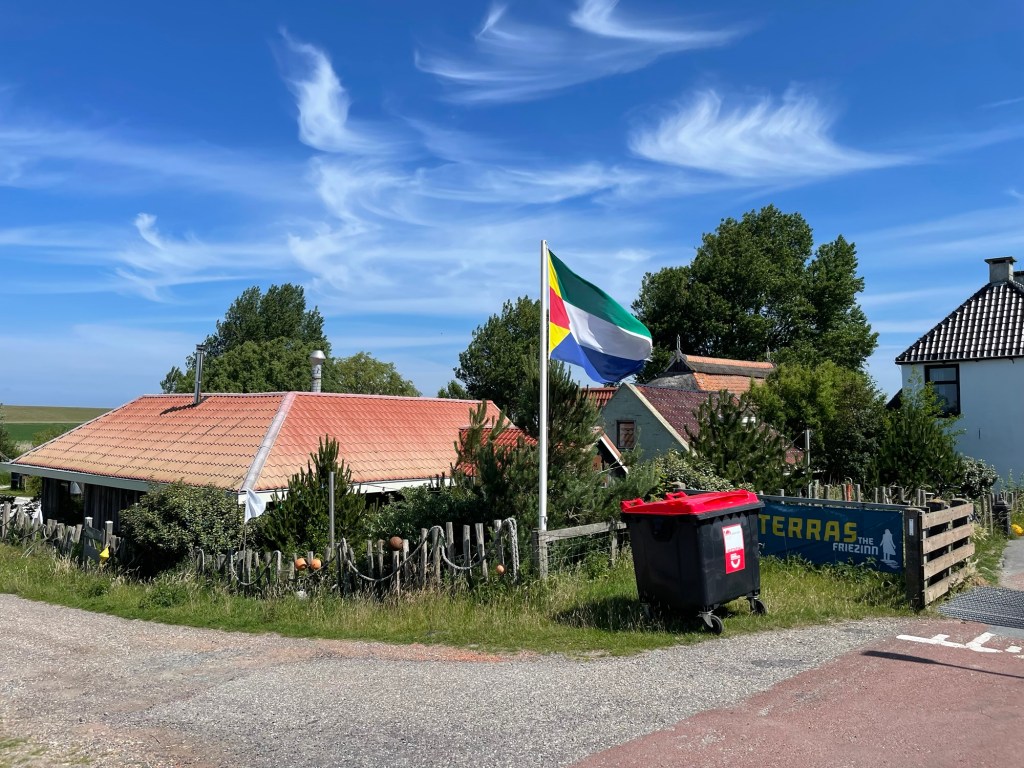
That night we stopped at Dokkum. Its place is burned into my memory as an example of when local knowledge is imperative when Google is out of its depth. The “hotel” was distributed across several buildings around the church square. Our particular building was new, but despite that – still no air conditioning. We checked in at another building that had a completely different name from that on Booking.com. We probably bicycled past the front and the back before we found it! After a bracing day of adventure in the wind and sun we could have done without the labyrinth search.
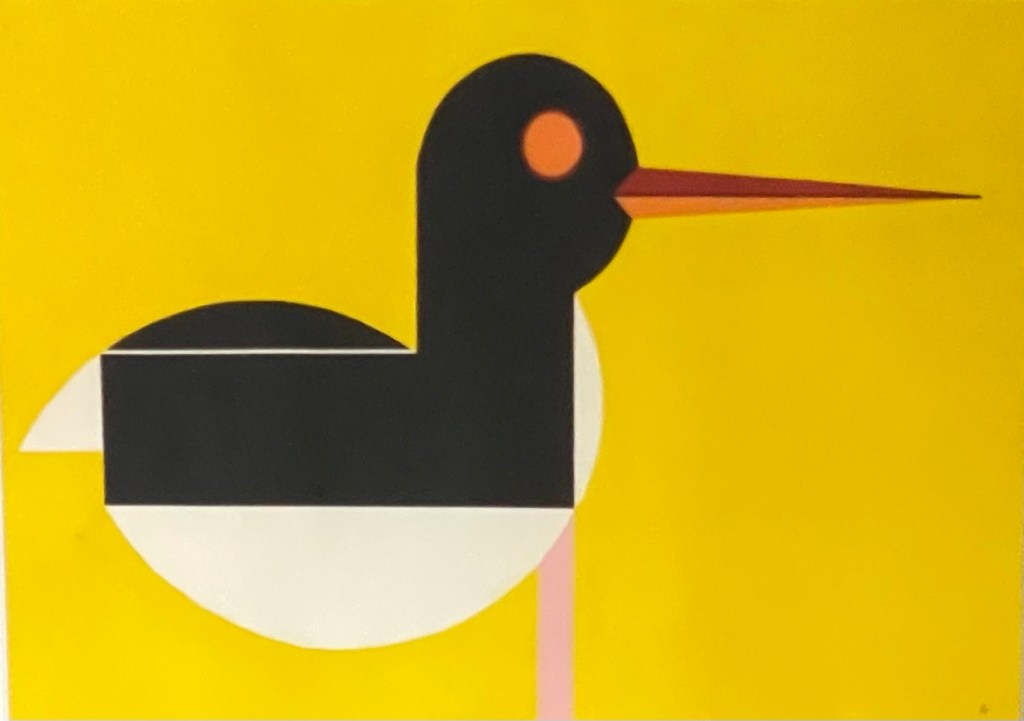
None the less, once we were checked in and acknowledged the stylized OysterCatcher art on the bedroom wall, we went in search of something for supper. Bistro chairs on the sidewalk with small groups of people enjoying the evening was a clue that we might have found our refreshment for the evening. Sure enough, Pizza and a bottle of Primitivo (a traditional wine from the Puglia region at the “heel” of Italy and the forerunner of the Zinfandel of California) did the trick. Andreas is a wealth of information regarding wines and over the past four years my palate has become more sensitized to the nuances of wines. I’m still very far from being able to recognize wines by their taste, but I enjoy exploring the aroma and taste notes as they change from first opening the bottle to draining the last drop. Primitivo was no exception. We also had a charming waiter from Italy who was excited to tell us that he had cruised around many of the coastal US areas.
The next morning we headed south east towards Groningen. My version of how we should get there took us on a bit of a detour, but fortunately our discussions about where we were were overheard by someone in their garden She popped her head over the bush fence and helped us get back on the more scenic canal bike route. The detour turned out to be not a complete waste of time. The little town of Eastrum was preparing for a weekend Western event. Big posters of saloons and western scenes dotted the Main Street.
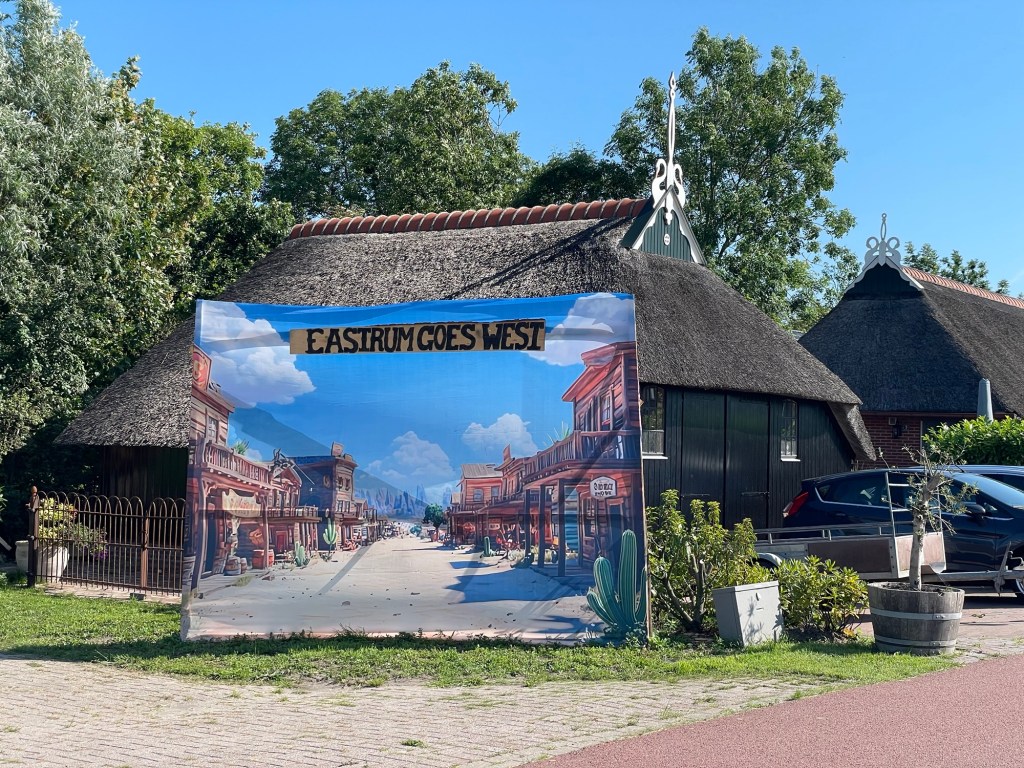
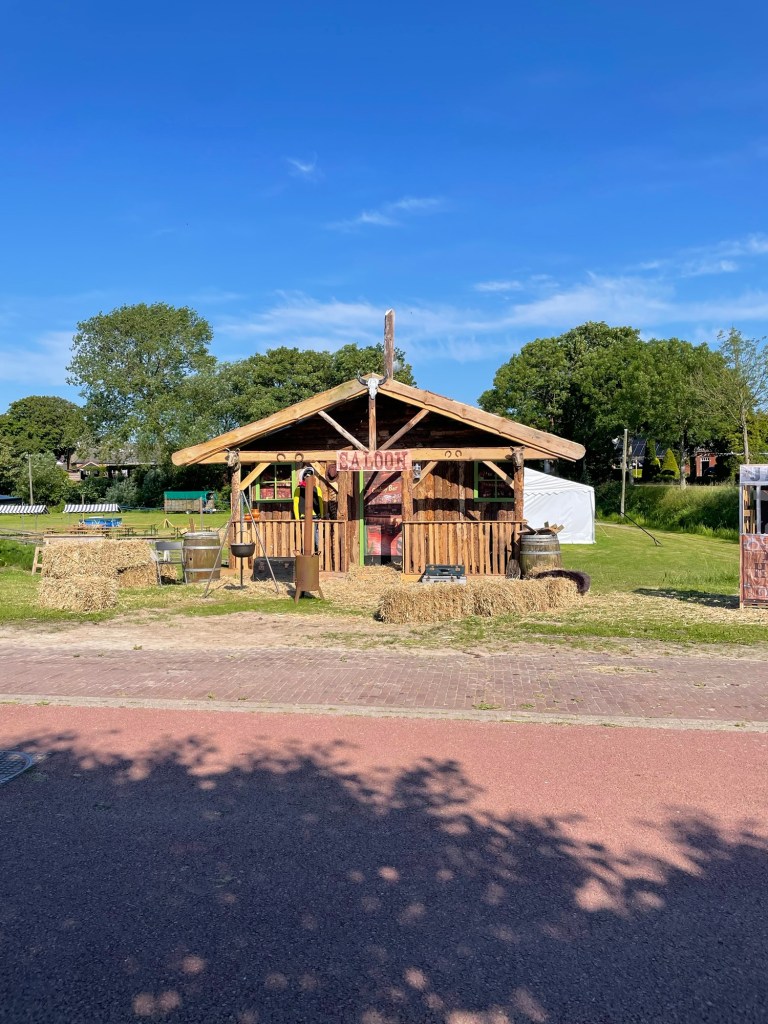
As we turned inland, the vegetation and architecture changed. The canals were lined with Burdock, and some of the farmhouses took on truely mansionesque proportions.
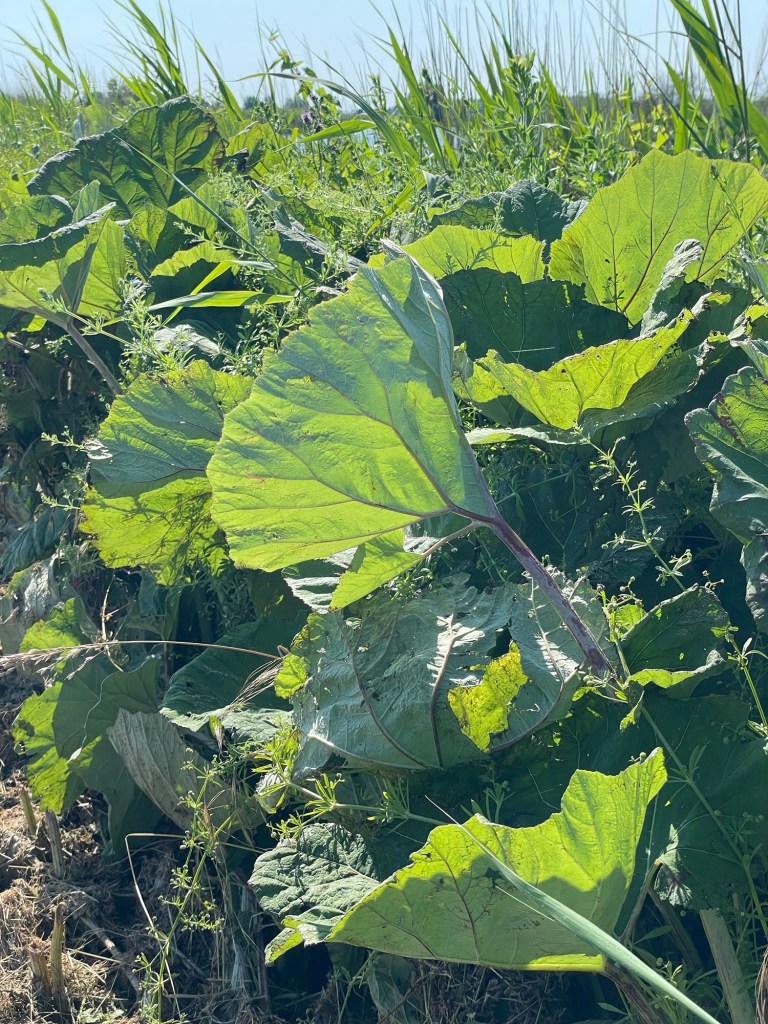
These massive burdock leaves really captured my imagination. The morning sun silhouetting the veins and giving the leaf edges a golden hue mirrored the larger than life sensation of being alive on a beautiful morning, riding the canals at a meandering pace and being able to soak in the colors and aromas of the area.
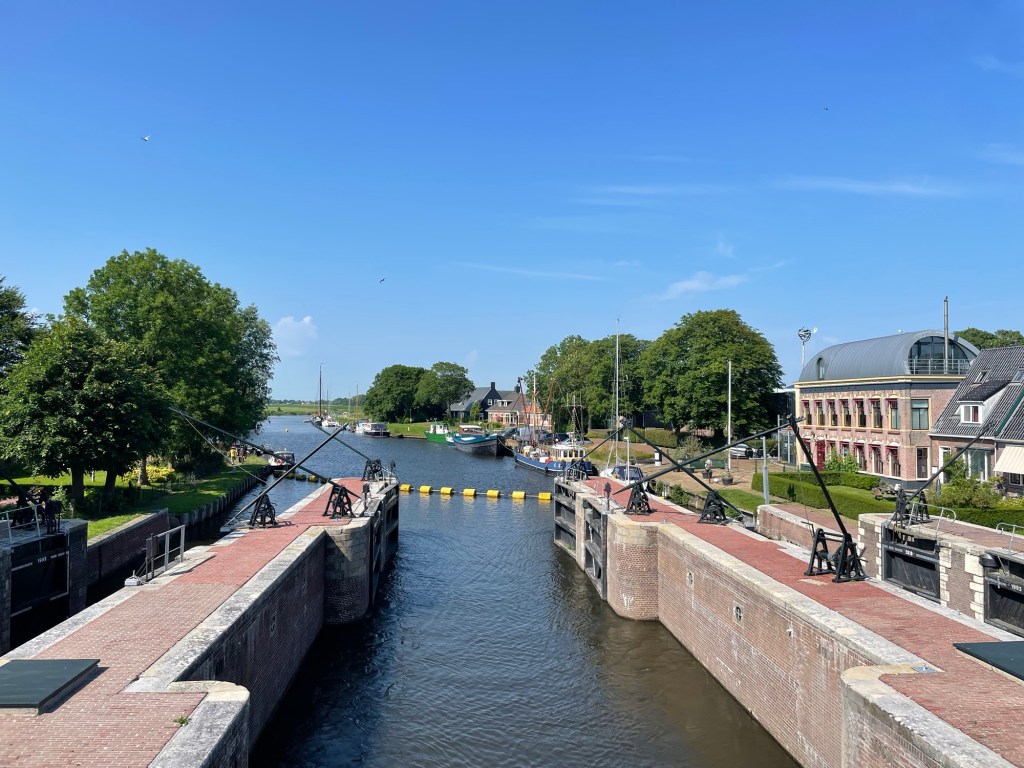
This area is known for its Kop-Hals-Rompboerderij (head-neck-rump) farmhouse design. The design features the living quarters (head) and massive architectural barn (Rump) connected by a smaller lower building (Neck). The neck housed the farm working area for butter making, churning butter and making cheese. It is said that the silhouette looks like a sleeping cow.
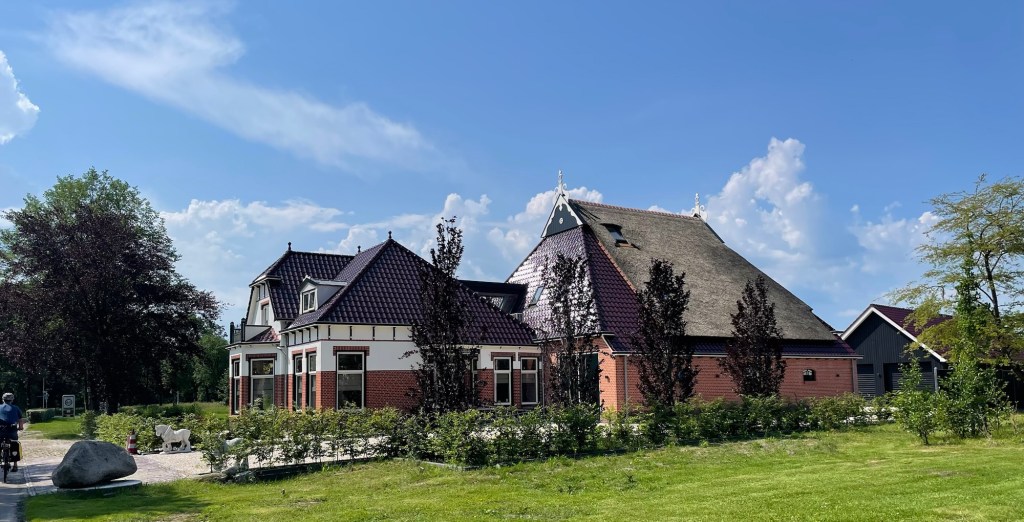
Another interesting construction detail that I have noticed over the past few years is the combined use of thatch and clay tiles. Thatch is often used over the main section of the barn for its insulation qualities. Also the source material is very much locally available. It requires more maintenance and doesn’t last as long (25-40 years). The clay tiles are used over living areas as they last for decades (50-100 years).
The barn (Rump) is huge to accommodate all the livestock of the farm when North Sea storms blow in. It also houses all the animal feed. Thanks to Google, I learned about a particularly intriguing part of the barn architecture, the Uilenbord (Owl board). It’s the decorative triangular structure on the ridge of the roof that provides protection from wind and rain for owls that hunt mice and other small animals that are associated with farm life.
The house in the picture above epitomizes all of these features. In older structures of this type that I saw, the barn would be at least 2-3 times longer than the house. Later in the day I saw permutations where the neck disappeared and the house became a solid 2-3 story affair with a grandiose entrance. It seemed as though the sleeping cow‘s head has grown to engulf the neck. Perhaps these places have evolved into „business retreats“ for team building exercises??? Despite on going reduction in interest in local farming, this area seems to be maintaining its local feel and there appears to be great pride in maintaining and restoring these magnificent iconic structures. I sincerely hope bigAgro does not come in and destroy this superb ecosystem.
By early afternoon we were getting close to our next overnight stop. We were anxious to get out of the sun for a while and enjoy a coffee and lunch. Stopping spots were thin on the ground this day but we did eventually find a charming bakery that sold lunch treats along with loaves.
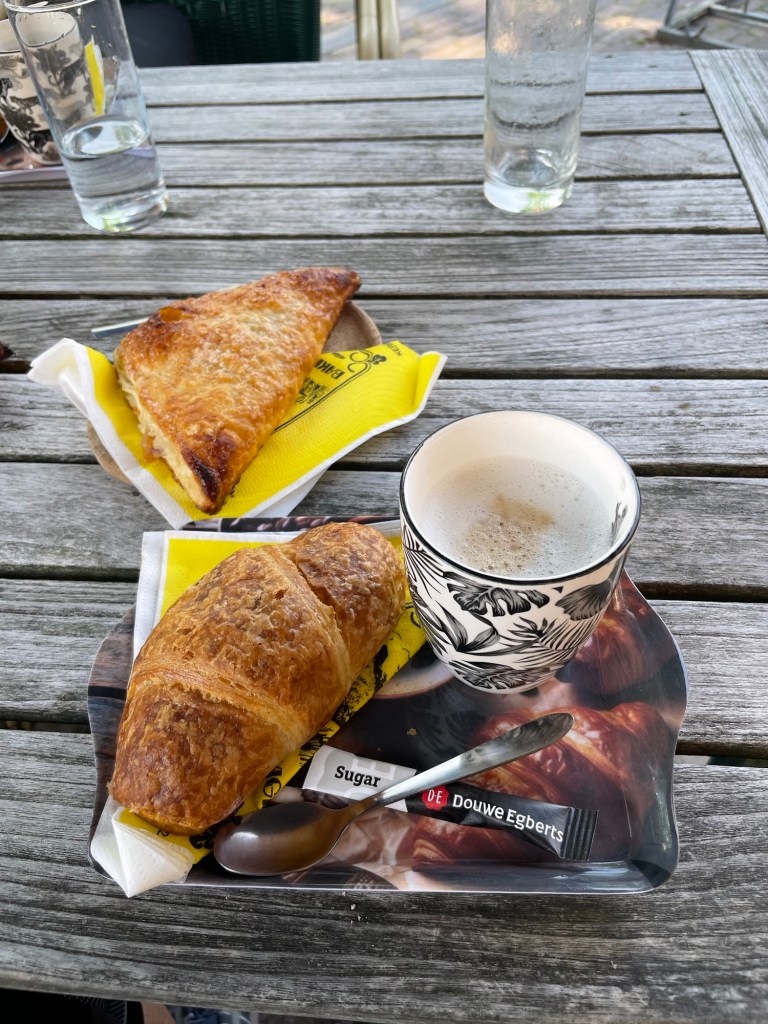
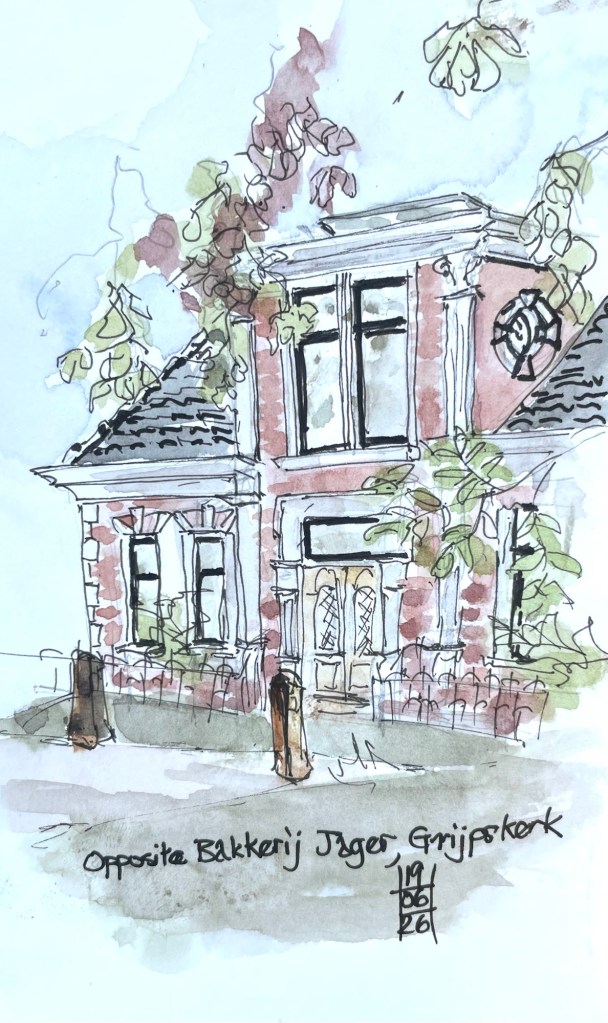
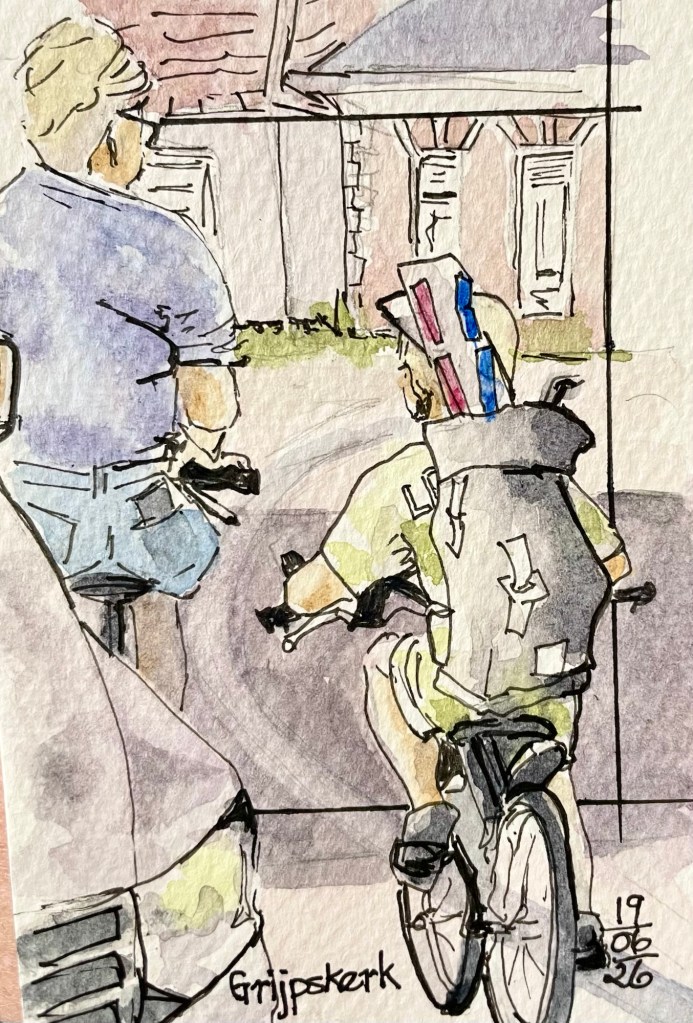

We rested up at this bakery for almost 2 hours. They had a small sitting area outside with an umbrella for shade. It was delightful to see the local dynamic that probably plays out daily. I couldn’t understand any of the Dutch but I did pick out a parting sound that was made between people who know each other well…. Sort of a sung ooh hoo not unlike the British “Cheerio” again with the help of Google AI I think what I heard was “Ajoos, tot snel” where Ajoos is two syllables, the first ah is lower pitched that’s the second “yoos” and it is said in a playful way.
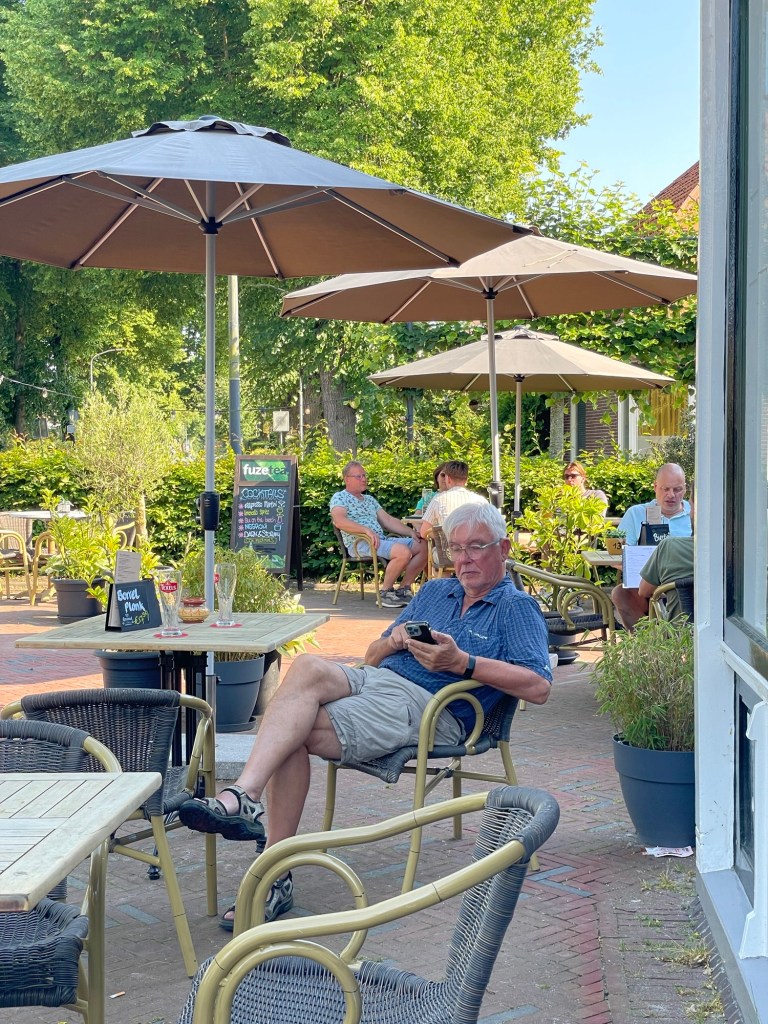
We ended our day in the town of Zuidhorn – yes another small town with open pedestrian areas, traditional architecture, cobbled streets…
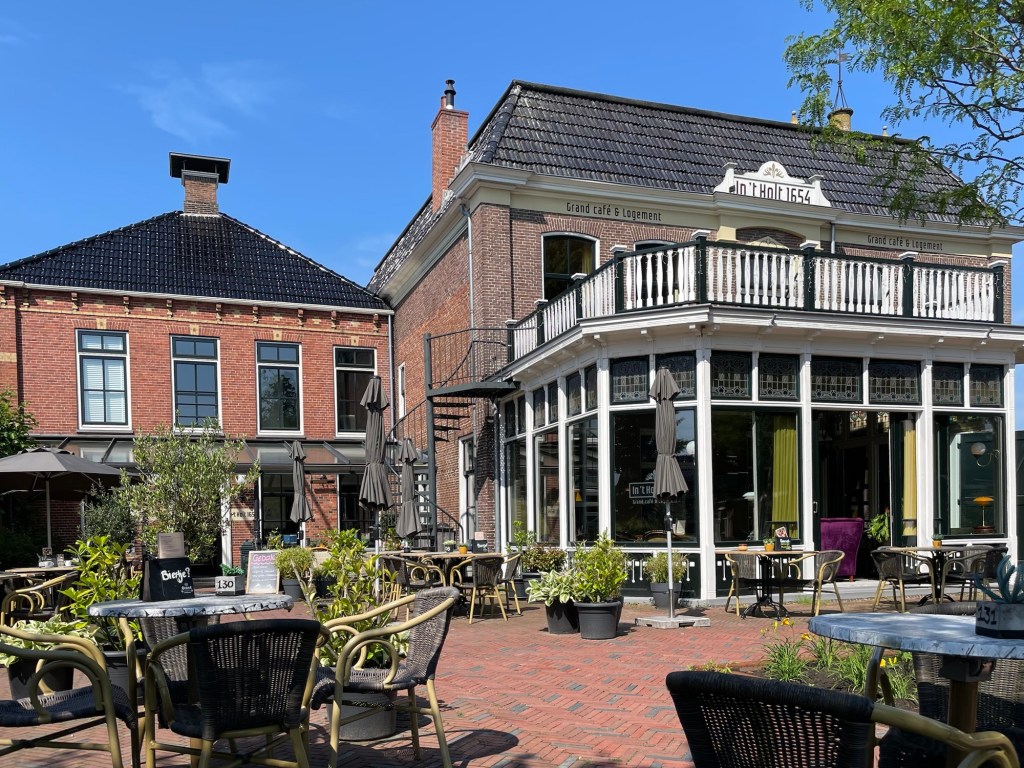
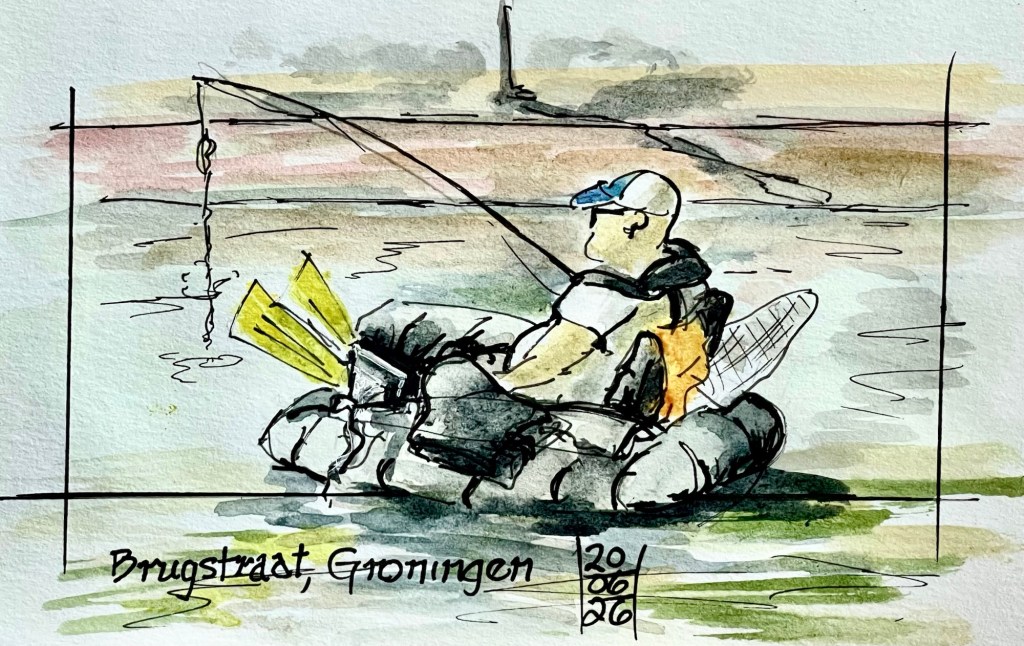
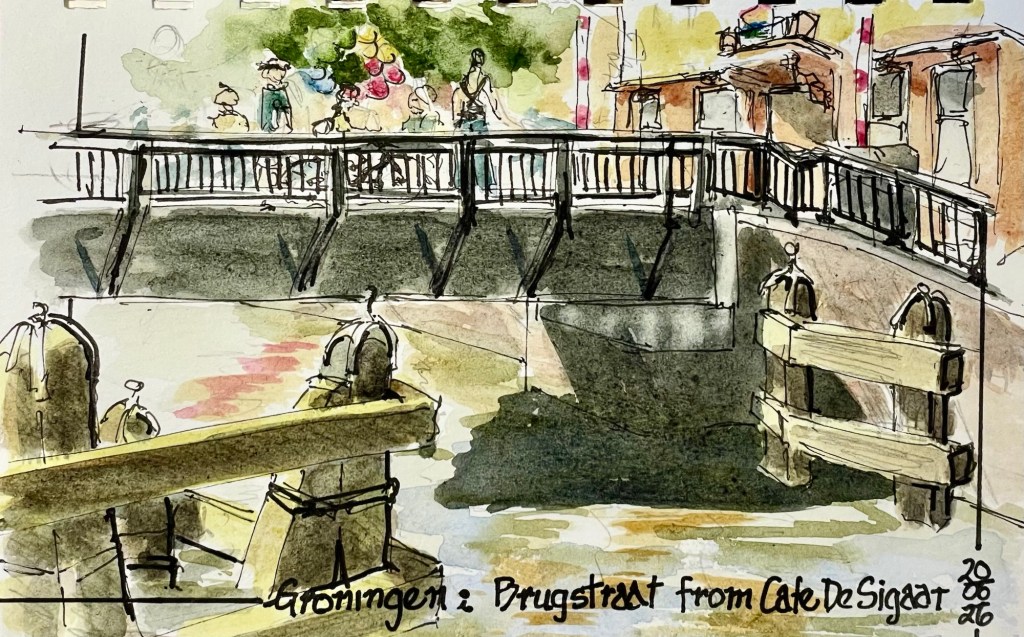
I was pretty tired that night and was looking forward to a good night’s sleep…. Not to be the case. The area experienced a massive lightening event that went on for hours accompanied by very high winds. The Royal Netherlands Meteorological Institute recorded over 188,000 strikes across the Netherlands with the area east of Groningen experiencing the worst of the storm. When we got up the next morning I was really wanting to stay put another night as I felt I needed to catch up with some rest. The trip was so full of new experiences I think my body just needed a break from all the excitement. Unfortunately there was no room in the Inn but we did manage to secure a room for a couple of nights to the east of Groningen. We had been anxious about cycling through a major Dutch city as our experience seeing the crowded bicycle lanes in Amsterdam really terrified us. We shouldn’t have been so frightened. There was a wonderful bicycle highway right into the downtown area. Maybe the storm had kept the bicyclists away. We did not know at that time how much damage was to the east so we thought that this was a typical Saturday morning in Groningen. I must admit we fell in love with the youthful vibe of the city. We found a lovely cafe with trees giving shade by one of the major canals and enjoyed watching the city come to life, complete with a modest Gay Pride parade complete with pink tractor. There were plenty of party boats floating the canal. Some clearly local football clubs with guys swilling beer at 10:30am, others more refined more fitting to a bachelorette group sipping Aperols and munching bitterballlen. The funniest thing of all was seeing two fisherman float by reclining in what appeared to be inflatable sofas. The “sofas” were kitted out with a fish finder and other fishing accoutrements. Propulsion was self made by virtue of fluorescent green flippers
Well that’s all for now… the next episode will cover our arrival back into Germany


